It's been a tough eighteen months to be a Melburnian. The world's longest lockdown has sucked the energy from us all and I, for one, have been creatively bereft. Still, what had to be done had to be done and now we find ourselves at the other end, with life returning to something resembling normal. A newfound vigour is coursing through the air. There's bloody traffic on the roads. I have to talk to people again. Oh well. I suppose it couldn't have happened at a better time for me because it's my favourite month of the year - Novella November. Yep, for thirty days I throw caution, responsibility, real work and life to the wind so I can read a book a day and live tweet it. For those who have Twitter, please follow me @BramPresser. For those who don't I'm emerging from my Blog Coma to do weekly updates for the rest of the month, posting the bite-sized reviews in batches. Hopefully that will also kick me into gear to keep going through December and beyond with usual programming. Anyway, happy Novella Novella. Hope you find as much joy in the perfect literary form as I do!
Water Music - Christine Balint
As always, I begin with a Viva La Novella Prize winner. Drawing from an obscure historical footnote, and riffing on identity, belonging and art, Balint has given us a book about music that, in its lyricism, is itself musical. Bravo.
The Solitary Twin - Harry Mathews
Killer swan song from America’s first Oulipian. A tangle of stories that unfurl in sinews to reveal the truth behind identical twins whose appearance has upended a small town. Sex, deceit, murder and a twist that really stings.
Among the Hedges - Sara Mesa
Teenager Soon wags school in a local park, where she befriends a homeless old man with a penchant for birding. Sinister undertones course beneath the delightful innocence, making for a beguiling, compelling little read.
The Most Precious of Cargoes - Jean-Claude Grumberg
A peasant catches a baby thrown from a cattle train bound for hell. The child grows up, loved by her new family, while her father struggles to survive. A traditional but not cliched fable, it will tear at your soul.
Astral Season, Beastly Season - Tahi Saihate
Kooky Japanese gem about some school kids so hell bent on proving their B-grade idol isn't a murderer that they kill a bunch of people to throw police off the scent. A surefire cult classic in the making with unexpected depth.
Chasing Homer - László Krasznahorkai
Words, images and percussive soundscapes (via QR code) collide in this paranoid, obsessive quest of self-nullification and perpetual exile as a means of escaping unknown, would-be murderers. Intense and utterly mesmerising.
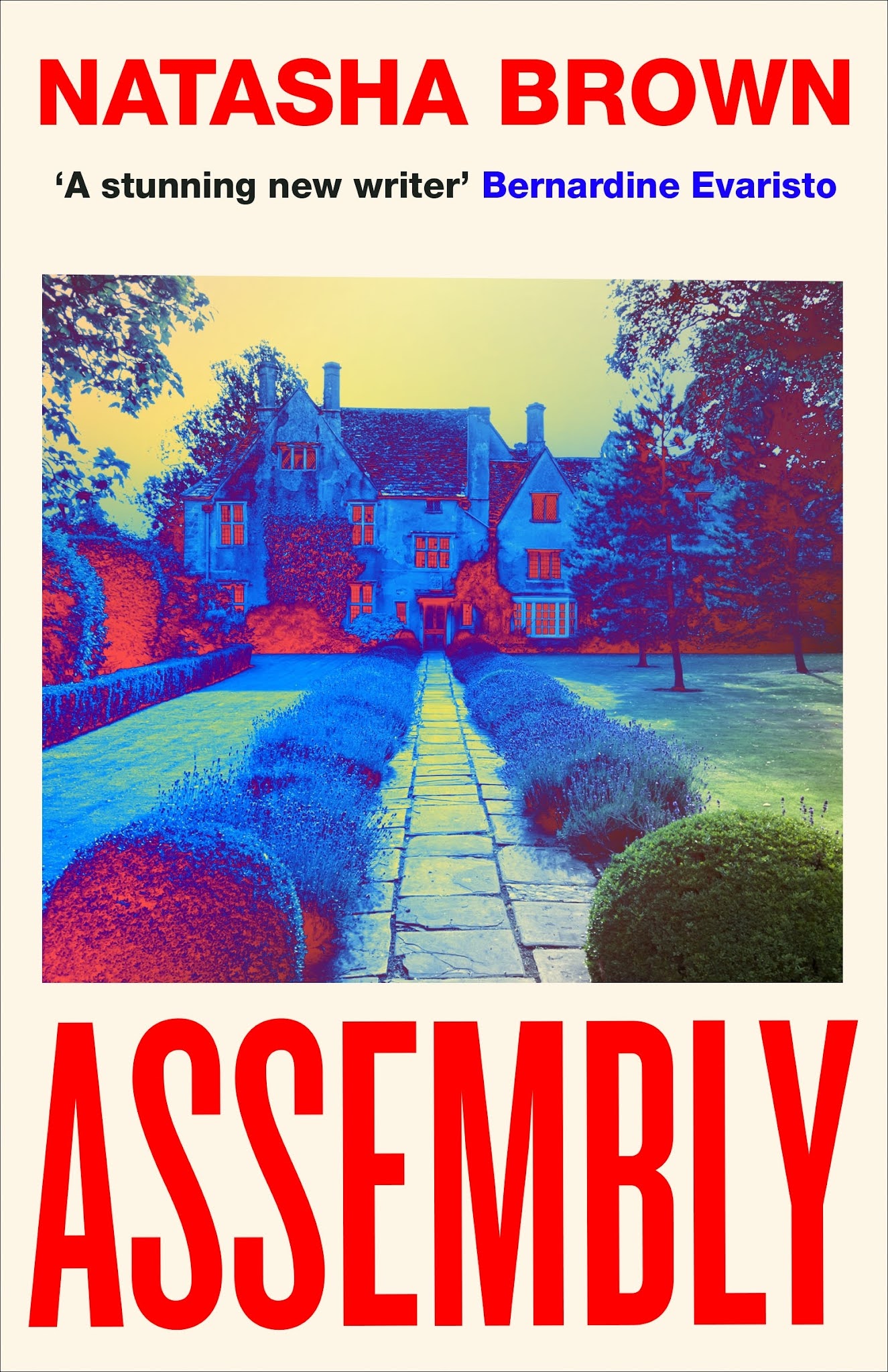
Assembly - Natasha Brown
At last, a zeitgeist book that doesn't suck. Assembly is an exhilarating bomb placed beneath the classist, racist, misogynist, colonial foundations of British society and set off to spectacular effect. Just read it.
Showing posts with label Microviews. Show all posts
Microviews Vol. 61: A Bookcase of Curiosities
Homeland Elegies by Ayad Akhtar
Back in 2013, Ayad Akhtar found himself at the centre of quite the political shitstorm. Conservative pundits were up in arms about his Pulitzer Prize winning play, Disgraced, in which one its characters, a Muslim, admitted to having felt a "blush of pride" when the planes hit the towers. That one line was tinder for the close-minded right wingers who gleefully missed the entire point and came at him with proverbial pitchforks. The question of what it means to be Muslim in post-911 America also lies at the heart of Homeland Elegies, though Akhtar revisits it in an altogether different way. The novel, inasmuch as it is one, is a perfectly-executed book of autofiction. Akhtar draws on moments of his own life (with which some readers will be familiar) and seamlessly inserts invented characters and events that flesh out the complicated relationship he has with the country in which he was born but that has since made him "other". So seamless are these insertions, that it took for me to look up a key person in the story to realise he only existed on the page. Akhtar is unrelenting in his self-examination, demonstrating remarkable courage and insight while grappling with feelings of belonging, anger, grief and hope. In so doing, he lays bear the structural and institutional racism that has always existed but that has ramped up to breaking point under Trump's disastrous presidency. That he does so concurrently with an underlying thread of filial investigation - he is as much coming to terms with his father's failings as he is his country's and his own - serves to add a layer of humanity and warmth that (I hope) breaks down the wall of otherness to some readers. Structured episodically in linked narrative essays - elegies, really - that come together to make an astonishing whole, Homeland Elegies is truly a book for our time, one that everyone should read.
Tell Me Lies by JP Pomare
It's easy to dismiss me as some kind of wanky literary snob. God knows I give enough ammunition. So it might come as some surprise that I love myself a good thriller and, when it comes to finding the best ones, JP Pomare has fast become my go-to. That guy knows how to plot. Tell Me Lies started off as a audio short. It was never intended to appear in book form. Alas, the commercial gods demand what the commercial gods demand and so, following the stellar success of the excellent In The Clearing, and to satiate the salivating masses anxiously awaiting The Last Guests, we have something that is, to paraphrase Britney, not a novella but not yet a novel. It starts off unassuming enough - psychologist Margot Scott sees a bunch of clients, including a new kid referred to her by an old colleague. The kid is witty and charming and very, very handsome. He's also inappropriately flirty. It all seems a bit harmless until BAM a molotov cocktail is thrown through her window. Could it be one of her clients? Could it be him? And what is the dark secret Margot is desperate to hide? Kicked into high gear, Tell Me Lies is a ripper thriller, full of unexpected twists, thorny moral quandries and deft psychological mindfuckery. And that last page... Whoah...
Three-Fifths by John Vercher
Speaking of genre fiction, here's one that really hit me in the feels. Hand sold to me by a bookseller friend who is rarely effusive about books and usually leans towards the more traditionally literary end of the fictional spectrum, I bought it without so much as reading the blurb. Three Fifths is a crime novel of sorts. It is also a moving family drama, a story of friendship gone awry and, most importantly, a disturbing snapshot of contemporary America. Bobby works a dead-end job at a local diner. His best friend turns up one day, fresh out of jail. They have not seen one another in three years and, it's fair to say, Aaron is a changed man. Once a scrawny, comic-book loving geek, he in now a buff, tattooed neo-Nazi. A minor altercation with a couple of black kids quickly escalates, and ends with Aaron smashing one of them in the face with a brick, ultimately killing him. It is violent and shocking and, for Bobby, utterly terrifying. Because, other than being made complicit in a terrible crime, Bobby has a much bigger problem. Though he presents as white, his father is black. While the fallout from the crime remains central to the story, it is the examination of racial identity that really lies at the heart of this book. The whole thing careens out of control, towards an horrific, inevitable end. It's ugly and heart-rending. But holy crap it's good. Talk about putting yourself on the map with your debut!
Hole's Live Through This by Anwyn Crawford
For all the notoriety that surrounds her, it's easy to forget quite how incredible Courtney Love really is. Sure, she's been eclipsed in the collective cultural memory by her husband, and is often spitefully (and wrongly) blamed for his death, but one listen to 1994's Live Through This and you will be left in no doubt that she is a superstar in her own right, capable of writing a tune that could kick the arse of pretty much anything Kurt ever did. Hell, even he thought so! Anwyn Crawford's brilliant cultural history of Hole's masterpiece is a must, not only for fans of the band, but anyone even vaguely interested in a musical movement that came to define a decade. Through personal reflection, interview, critical analysis and sharp observation of the cultural milieu, Crawford takes you deep inside the multiplicity of forces that came together in a perfect storm to create what remains one of my favourite albums of all time. Plus, it got me listening to Live Through This on repeat, with a new appreciation, maybe even an understanding, of one of the most complex, controversial and downright impressive figures in the history of contemporary music. Couldn't possibly ask for more than that!
A Country for Dying by Abdellah Taïa
A spot of bookshop serendipity landed this gem in my hands after a very obscure customer order came to naught, leaving it languishing on a shelf in bayside Melbourne. Well, thanks random shitty customer who doesn't respect small indie bookstores! Your dickery is my windfall. Okay, maybe not the most easy or pleasant winfall I've ever had, but I'm still pretty glad I got it. In A Country For Dying, Abdellah Taïa explores the seedy underside of Parisian life through two Arab prostitutes, Zahira and Zannouba, as they make sense of, and find dignity and agency in their lives. Zahira is in the twilight of her career and submits to ever-greater degradations. Little does she know that her former lover Allal has followed her from Morocco with murderous intent. Zannouba, formerly a gay Iranian revolutionary, battles with her identity as she prepares for gender confirmation surgery. Their stories unfurl in an almost Scheherezade-like fashion, with multiple time slips, fables, reminiscences and diversions. It can all be a bit disorientating at times, but you best let it envelope you. Taïa is constructing a tapestry of contemporary immigrant life, one in which the dream of refuge becomes a waking nightmare. Which isn't to say the story is lost to horror. The hope and decency with which he imbues Zahira and Zannouba - not to mention pockets of humour - lifts the novel above the bleak misery of its premise, and transforms it into something deeply moving.
Back in 2013, Ayad Akhtar found himself at the centre of quite the political shitstorm. Conservative pundits were up in arms about his Pulitzer Prize winning play, Disgraced, in which one its characters, a Muslim, admitted to having felt a "blush of pride" when the planes hit the towers. That one line was tinder for the close-minded right wingers who gleefully missed the entire point and came at him with proverbial pitchforks. The question of what it means to be Muslim in post-911 America also lies at the heart of Homeland Elegies, though Akhtar revisits it in an altogether different way. The novel, inasmuch as it is one, is a perfectly-executed book of autofiction. Akhtar draws on moments of his own life (with which some readers will be familiar) and seamlessly inserts invented characters and events that flesh out the complicated relationship he has with the country in which he was born but that has since made him "other". So seamless are these insertions, that it took for me to look up a key person in the story to realise he only existed on the page. Akhtar is unrelenting in his self-examination, demonstrating remarkable courage and insight while grappling with feelings of belonging, anger, grief and hope. In so doing, he lays bear the structural and institutional racism that has always existed but that has ramped up to breaking point under Trump's disastrous presidency. That he does so concurrently with an underlying thread of filial investigation - he is as much coming to terms with his father's failings as he is his country's and his own - serves to add a layer of humanity and warmth that (I hope) breaks down the wall of otherness to some readers. Structured episodically in linked narrative essays - elegies, really - that come together to make an astonishing whole, Homeland Elegies is truly a book for our time, one that everyone should read.
Tell Me Lies by JP Pomare
It's easy to dismiss me as some kind of wanky literary snob. God knows I give enough ammunition. So it might come as some surprise that I love myself a good thriller and, when it comes to finding the best ones, JP Pomare has fast become my go-to. That guy knows how to plot. Tell Me Lies started off as a audio short. It was never intended to appear in book form. Alas, the commercial gods demand what the commercial gods demand and so, following the stellar success of the excellent In The Clearing, and to satiate the salivating masses anxiously awaiting The Last Guests, we have something that is, to paraphrase Britney, not a novella but not yet a novel. It starts off unassuming enough - psychologist Margot Scott sees a bunch of clients, including a new kid referred to her by an old colleague. The kid is witty and charming and very, very handsome. He's also inappropriately flirty. It all seems a bit harmless until BAM a molotov cocktail is thrown through her window. Could it be one of her clients? Could it be him? And what is the dark secret Margot is desperate to hide? Kicked into high gear, Tell Me Lies is a ripper thriller, full of unexpected twists, thorny moral quandries and deft psychological mindfuckery. And that last page... Whoah...
Three-Fifths by John Vercher
Speaking of genre fiction, here's one that really hit me in the feels. Hand sold to me by a bookseller friend who is rarely effusive about books and usually leans towards the more traditionally literary end of the fictional spectrum, I bought it without so much as reading the blurb. Three Fifths is a crime novel of sorts. It is also a moving family drama, a story of friendship gone awry and, most importantly, a disturbing snapshot of contemporary America. Bobby works a dead-end job at a local diner. His best friend turns up one day, fresh out of jail. They have not seen one another in three years and, it's fair to say, Aaron is a changed man. Once a scrawny, comic-book loving geek, he in now a buff, tattooed neo-Nazi. A minor altercation with a couple of black kids quickly escalates, and ends with Aaron smashing one of them in the face with a brick, ultimately killing him. It is violent and shocking and, for Bobby, utterly terrifying. Because, other than being made complicit in a terrible crime, Bobby has a much bigger problem. Though he presents as white, his father is black. While the fallout from the crime remains central to the story, it is the examination of racial identity that really lies at the heart of this book. The whole thing careens out of control, towards an horrific, inevitable end. It's ugly and heart-rending. But holy crap it's good. Talk about putting yourself on the map with your debut!
Hole's Live Through This by Anwyn Crawford
For all the notoriety that surrounds her, it's easy to forget quite how incredible Courtney Love really is. Sure, she's been eclipsed in the collective cultural memory by her husband, and is often spitefully (and wrongly) blamed for his death, but one listen to 1994's Live Through This and you will be left in no doubt that she is a superstar in her own right, capable of writing a tune that could kick the arse of pretty much anything Kurt ever did. Hell, even he thought so! Anwyn Crawford's brilliant cultural history of Hole's masterpiece is a must, not only for fans of the band, but anyone even vaguely interested in a musical movement that came to define a decade. Through personal reflection, interview, critical analysis and sharp observation of the cultural milieu, Crawford takes you deep inside the multiplicity of forces that came together in a perfect storm to create what remains one of my favourite albums of all time. Plus, it got me listening to Live Through This on repeat, with a new appreciation, maybe even an understanding, of one of the most complex, controversial and downright impressive figures in the history of contemporary music. Couldn't possibly ask for more than that!
A Country for Dying by Abdellah Taïa
A spot of bookshop serendipity landed this gem in my hands after a very obscure customer order came to naught, leaving it languishing on a shelf in bayside Melbourne. Well, thanks random shitty customer who doesn't respect small indie bookstores! Your dickery is my windfall. Okay, maybe not the most easy or pleasant winfall I've ever had, but I'm still pretty glad I got it. In A Country For Dying, Abdellah Taïa explores the seedy underside of Parisian life through two Arab prostitutes, Zahira and Zannouba, as they make sense of, and find dignity and agency in their lives. Zahira is in the twilight of her career and submits to ever-greater degradations. Little does she know that her former lover Allal has followed her from Morocco with murderous intent. Zannouba, formerly a gay Iranian revolutionary, battles with her identity as she prepares for gender confirmation surgery. Their stories unfurl in an almost Scheherezade-like fashion, with multiple time slips, fables, reminiscences and diversions. It can all be a bit disorientating at times, but you best let it envelope you. Taïa is constructing a tapestry of contemporary immigrant life, one in which the dream of refuge becomes a waking nightmare. Which isn't to say the story is lost to horror. The hope and decency with which he imbues Zahira and Zannouba - not to mention pockets of humour - lifts the novel above the bleak misery of its premise, and transforms it into something deeply moving.
18 Books Under 180 Pages
I had big plans for 2020. Get this blog going again. Make a decent start on my next book. Read some great big bricks that I've been putting off for years. Chew through any others that are released along the way. Now, I sit at my desk staring at my TBR shelf, physically repulsed by the spines of Charlie Kaufman's Antkind, Krasznahorkai's Baron Wenckeim's Homecoming, David Mitchell's Utopia Avenue and Alex Pheby's Mordew. Holy shit I want to read them. Especially the Pheby. But the brain fog brought on by the pandemic and all the crappiness associated with it has laid waste to my (admittedly optimistic) plans. And so, like many others, I have been reading short books. Lots of them. Not that I'm complaining.
There's been a lot of chatter on the socials about which novellas people should be reading. Lithub put out a great list. And I loved Caustic Cover Critic's 50 Short Excellent Books You Can Read in One Hit in Isolation. So, jumping on the bandwagon, here's a bunch of novellas I love. I've tried to mostly stick to books that have flown under the radar. Also, I'll probably make a series of these. My novella shelf is jam packed and double stacked!
EAT HIM IF YOU LIKE by JEAN TEULE
Based on a true story, Eat Him If You Like is a deliciously savage rumination on political unrest, mob rule and collective guilt. The deputy mayor of a small French village goes to market to buy a pig for his poor neighbour. But when one villager mistakenly "hears" him make a pro-Prussian comment, the villagers are enraged. Swept up in a frenzy, they kill and eat the hapless poli. Needless to say, it's not hard to find contemporary parallels.
THE GRAVEYARD by MAREK HŁASKO
A crushing portrait of life in Communist Poland, The Graveyard tells of a hapless factory worker systematically destroyed by the faceless powers that be after he drunkenly abuses a policeman.
DOPPELGÄNGER by DAŠA DRNDIĆ
Drndić called Doppelgänger her "ugly little book" and, while she may be right, it also distills everything that was great about her into two strangely-linked stories. It starts with two old people masturbating one another through their adult diapers on a park bench and ends with a man suiciding by slamming his head against the steel doors of a rhino enclosure. In between, we get all the ugliness of 20th century European history. A perfect, sickening gem.
THE TIDINGS OF THE TREES by WOLFGANG HILBIG
In the ashes of what was once a forest, a failed writer encounters inhabitants called Garbagemen who are sorting through the detritus of a destroyed civilisation and arranging discarded mannequins into obtuse poses. This is horror at its most existential.
BESIDE THE SEA by VERONIQUE OLMI
Rendered in a voice so convincing, so maudlin, so devoid of hope, Beside The Sea is the confession of a young mother who has taken her two young sons to a seaside town in order to kill them. There are no fancy tricks here, just the crushingly pained words of a woman who has been failed by the system and sees no alternative but to snuff out their little lives. The single most devastating book I've ever read.
TOO LOUD A SOLITUDE by BOHUMIL HRABAL
I can relate to no character in modern literature more than Hanta, the tragic wastepaper compacter who narrates this novel. Although his job is to collect and crush discarded books, he is also a saviour of greater works, pulling them from the trash piles and stuffing them in his bag to take home. His little house is crumbling under the weight of all the books, but his love for literature far exceeds his sense of self-preservation. One of my favourite books about the love of books.
CHRIST'S ENTRY INTO BRUSSELS by DIMITRI VERHULST
The whole city goes into conniptions when word leaks out that Jesus is back and he's coming to Brussels. Verhulst's book is an hilarious excoriation of our celebrity/religion/consumer obsessed society.
COMEDY IN A MINOR KEY by HANS KEILSON
A "righteous gentile" is bitterly disappointed when the Jew he is hiding in the attic dies, meaning that he will not be able to reap the glory. Plus there's the small issue of disposing of the body. A sharp satire on the limits of altruism.
THE FISH GIRL by MIRANDI RIWOE
A gorgeous novella that makes high art of Somerset Maugham's scraps, The Fish Girl will draw you in gently before plunging a thousand daggers into your soul. A hugely deserving winner of the wonderful Viva La Novella prize a few years ago.
KLAUS KLUMP: A MAN by GONÇALO M. TAVARES
The third book in the consistently brilliant "Kingdom" trilogy of linked novellas, Klaus Klump tells the story of a man devoid of values bumbling his way through a bleakly amoral world. Cold, exististential brilliance. I also recommend Tavares's Neighborhood cycle as an intidote - it's bloody hilarious and absurd.
A WHOLE LIFE by ROBERT SEETHALER
Rare is the book that can so profoundly move me in so few pages. A Whole Life is the story of a very ordinary man, a cripple carving out an unremarkable existence in the Austrian Alps, who is swept up as a bit player in historical moments of the 20th century. I really can't speak highly enough of its subtle, radiant beauty.
PINK MIST by OWEN SHEARS
Ok, I'm sort of cheating here. Pink Mist is a novella, but it's in the form of a prose poem. Still, as a searing indictment on the sheer horror and futility of war I can think of few equals. I think I cried multiple times. Absolutely magnificent.
THE CHILDREN'S CRUSADE by MARCEL SCHWOB
Children leave their homes en masse to find the Holy Land, but are instead tricked and sold to slave traders. Those familiar with this medieval legend will somehow still find themselves horrified by Schwob's masterful, dreamlike retelling. Reads like a fable forced through a mincer. I mean that as a compliment.
A DEVIL COMES TO TOWN by PAULO MAURENSIG
The devil, posing as a publisher, turns up in a town full of aspiring writers. Nastiness, petty jealousy and all-round hilarity follow. A pitch perfect fable that is eminently relatable while maintaining that other-worldliness that is the hallmark of the form. Every writer should read this.
THE DEVIL'S WORKSHOP by JACHYM TOPOL
The narrator is mistakenly identified by a weird Belarussian cabal, as the man who 'saved' Terezin and made it a popular destination for Holocaust tourists. Hoping to build a monument of their own, they kidnap him and set him on the task of popularising The Devil's Workshop, the 'ultimate' house of horrors. A short, absurdist fairytale, Topol's book hilariously lampoons its subject while giving pause for serious thought about the boundaries of respectable commemoration.
THE A26 by PASCAL GARNIER
Crime fiction doesn't get much better than this masterpiece of amorality. Having been diagnosed with terminal cancer, Bernard finds himself free from society's shackles. What follows can only be described as a rampage of depravity.
MAD SHADOWS by MARIE-CLAIRE BLAIS
What was it that Tolstoy said about families? Well the one at the centre of Mad Shadows must be the most singularly miserable, unlikeable family of all time. A thoroughly nasty, unpleasant, misanthropic delight. I loved it!
LATE SONATA by BRYAN WALPERT
Beautifully-crafted, thoughtful, and elegiac, this gorgeous novella has big and profound things to say about ageing, creativity and the nature of love through time that greatly belies its brevity. Another Viva La Novella prize triumph.
There's been a lot of chatter on the socials about which novellas people should be reading. Lithub put out a great list. And I loved Caustic Cover Critic's 50 Short Excellent Books You Can Read in One Hit in Isolation. So, jumping on the bandwagon, here's a bunch of novellas I love. I've tried to mostly stick to books that have flown under the radar. Also, I'll probably make a series of these. My novella shelf is jam packed and double stacked!
EAT HIM IF YOU LIKE by JEAN TEULE
Based on a true story, Eat Him If You Like is a deliciously savage rumination on political unrest, mob rule and collective guilt. The deputy mayor of a small French village goes to market to buy a pig for his poor neighbour. But when one villager mistakenly "hears" him make a pro-Prussian comment, the villagers are enraged. Swept up in a frenzy, they kill and eat the hapless poli. Needless to say, it's not hard to find contemporary parallels.
THE GRAVEYARD by MAREK HŁASKO
A crushing portrait of life in Communist Poland, The Graveyard tells of a hapless factory worker systematically destroyed by the faceless powers that be after he drunkenly abuses a policeman.
DOPPELGÄNGER by DAŠA DRNDIĆ
Drndić called Doppelgänger her "ugly little book" and, while she may be right, it also distills everything that was great about her into two strangely-linked stories. It starts with two old people masturbating one another through their adult diapers on a park bench and ends with a man suiciding by slamming his head against the steel doors of a rhino enclosure. In between, we get all the ugliness of 20th century European history. A perfect, sickening gem.
THE TIDINGS OF THE TREES by WOLFGANG HILBIG
In the ashes of what was once a forest, a failed writer encounters inhabitants called Garbagemen who are sorting through the detritus of a destroyed civilisation and arranging discarded mannequins into obtuse poses. This is horror at its most existential.
BESIDE THE SEA by VERONIQUE OLMI
Rendered in a voice so convincing, so maudlin, so devoid of hope, Beside The Sea is the confession of a young mother who has taken her two young sons to a seaside town in order to kill them. There are no fancy tricks here, just the crushingly pained words of a woman who has been failed by the system and sees no alternative but to snuff out their little lives. The single most devastating book I've ever read.
TOO LOUD A SOLITUDE by BOHUMIL HRABAL
I can relate to no character in modern literature more than Hanta, the tragic wastepaper compacter who narrates this novel. Although his job is to collect and crush discarded books, he is also a saviour of greater works, pulling them from the trash piles and stuffing them in his bag to take home. His little house is crumbling under the weight of all the books, but his love for literature far exceeds his sense of self-preservation. One of my favourite books about the love of books.
CHRIST'S ENTRY INTO BRUSSELS by DIMITRI VERHULST
The whole city goes into conniptions when word leaks out that Jesus is back and he's coming to Brussels. Verhulst's book is an hilarious excoriation of our celebrity/religion/consumer obsessed society.
COMEDY IN A MINOR KEY by HANS KEILSON
A "righteous gentile" is bitterly disappointed when the Jew he is hiding in the attic dies, meaning that he will not be able to reap the glory. Plus there's the small issue of disposing of the body. A sharp satire on the limits of altruism.
THE FISH GIRL by MIRANDI RIWOE
A gorgeous novella that makes high art of Somerset Maugham's scraps, The Fish Girl will draw you in gently before plunging a thousand daggers into your soul. A hugely deserving winner of the wonderful Viva La Novella prize a few years ago.
KLAUS KLUMP: A MAN by GONÇALO M. TAVARES
The third book in the consistently brilliant "Kingdom" trilogy of linked novellas, Klaus Klump tells the story of a man devoid of values bumbling his way through a bleakly amoral world. Cold, exististential brilliance. I also recommend Tavares's Neighborhood cycle as an intidote - it's bloody hilarious and absurd.
A WHOLE LIFE by ROBERT SEETHALER
Rare is the book that can so profoundly move me in so few pages. A Whole Life is the story of a very ordinary man, a cripple carving out an unremarkable existence in the Austrian Alps, who is swept up as a bit player in historical moments of the 20th century. I really can't speak highly enough of its subtle, radiant beauty.
PINK MIST by OWEN SHEARS
Ok, I'm sort of cheating here. Pink Mist is a novella, but it's in the form of a prose poem. Still, as a searing indictment on the sheer horror and futility of war I can think of few equals. I think I cried multiple times. Absolutely magnificent.
THE CHILDREN'S CRUSADE by MARCEL SCHWOB
Children leave their homes en masse to find the Holy Land, but are instead tricked and sold to slave traders. Those familiar with this medieval legend will somehow still find themselves horrified by Schwob's masterful, dreamlike retelling. Reads like a fable forced through a mincer. I mean that as a compliment.
A DEVIL COMES TO TOWN by PAULO MAURENSIG
The devil, posing as a publisher, turns up in a town full of aspiring writers. Nastiness, petty jealousy and all-round hilarity follow. A pitch perfect fable that is eminently relatable while maintaining that other-worldliness that is the hallmark of the form. Every writer should read this.
THE DEVIL'S WORKSHOP by JACHYM TOPOL
The narrator is mistakenly identified by a weird Belarussian cabal, as the man who 'saved' Terezin and made it a popular destination for Holocaust tourists. Hoping to build a monument of their own, they kidnap him and set him on the task of popularising The Devil's Workshop, the 'ultimate' house of horrors. A short, absurdist fairytale, Topol's book hilariously lampoons its subject while giving pause for serious thought about the boundaries of respectable commemoration.
THE A26 by PASCAL GARNIER
Crime fiction doesn't get much better than this masterpiece of amorality. Having been diagnosed with terminal cancer, Bernard finds himself free from society's shackles. What follows can only be described as a rampage of depravity.
MAD SHADOWS by MARIE-CLAIRE BLAIS
What was it that Tolstoy said about families? Well the one at the centre of Mad Shadows must be the most singularly miserable, unlikeable family of all time. A thoroughly nasty, unpleasant, misanthropic delight. I loved it!
LATE SONATA by BRYAN WALPERT
Beautifully-crafted, thoughtful, and elegiac, this gorgeous novella has big and profound things to say about ageing, creativity and the nature of love through time that greatly belies its brevity. Another Viva La Novella prize triumph.
Microviews Vol. 60: Nelson, Ciment, Vermes,
The Red Parts by Maggie Nelson
Maggie Nelson has been hovering on my reading periphery for a few years now. So many people I know adore her and her mega-hit, The Argonauts. But it was a personal recommendation from a friend whose taste I greatly respect (and mostly share hehe) that finally got me to pick up one of her books. And holy moly was she right! The Red Parts is, not to put too fine a point on it, a work of genius. Its back story alone deserves an entire book: Nelson had just published a cycle of poems about her murdered aunt, Jane, when she got word that the case had been reopened and an arrest made. It was long believed that, despite significant differences in MO, Jane was killed by John Collins, aka the Michigan Murderer. A chance DNA match, almost 40 years after the fact, proved otherwise. The Red Parts is a breathtaking deconstruction of the trial that followed calling into question the legal process and its players, as well as family lore, memory and criminal responsibility. It is personable, personal and engaging while also being intellectually rigorous and satisfying. Needless to say I’m a convert. I’ve already ordered Bluets.
5 Hooks
The Body in Question by Jill Ciment
In the few years I practised as a criminal lawyer, I was constantly intrigued by jury dynamics. The more I watched them, the deeper the curiosity became, all the more so because I knew that, simply by virtue of having studied and practised law, I was disqualified from ever experiencing it first hand. Gone were my fantasies of pulling a Henry Fonda and swaying eleven of my “peers” to the side of justice. We’re a good few years down the track now but the feeling remains. What the hell goes on back there when “we” can’t see them? For jurors C-2 and F-17 in Jill Ciment’s excellent novel, the answer is simple: lots of sex. Caught up in an affair that is fuelled in equal parts by boredom, the fear of ageing and the simple reality of throwing a bunch of people into a closed, isolated environment, the two take every opportunity to bonk, hoping the others won’t catch on. As it happens, there’s a murder trial going on, too. And what they take to be a private matter is quickly discovered, throwing the whole trial into jeopardy. As tawdry as it all sounds, Ciment is subtle in her execution, and The Body In Question is a surprisingly perceptive study of loneliness, attraction, guilt and social responsibility.
4 Hooks
The Hungry and the Fat by Timur Vermes
Debuts don’t come much more audacious than Timur Vermes’s satirical masterpiece, Look Who’s Back. Inexplicably plonking Hitler back in contemporary Germany and charting his meteoric rise to reality TV superstardom, Vermes managed to stick a mighty big skewer through German politics, the worldwide obsession with celebrity, and the ever-present willingness to disregard morality when it clashes with personal convenience. It’s a bloody funny book, all the more so for how true it all rings. Now, with the considerable weight of expectation on his shoulders, Vermes returns with The Hungry and the Fat, a book that does not pack quite the same punch as his first but still has a lot of uncomfortably funny things to say. Nadeche Hackenbusch - model, TV presenter and queen of the vacuous platitude - has landed in quiet the pickle. Despite great ratings, her white saviour wet dream of a reality TV show, Angel In Adversity is about to be canned. She’s still in Africa’s largest refugee camp and has grown rather fond of her ‘co-stars’. In particular, a certain young chap called Lionel has stolen her heart (and her marriage). Together, they plan the ultimate stunt - to lead the refugees on foot to Germany. It’s positively biblical! Cue apoplexy from all sides. The TV execs scramble to work out how best to follow the exodus. Leaders of countries along the path roll out the heavy defences. German politicians of every shade go into meltdown - can they stop the influx without seeming callous/weak? The people smugglers shift into overdrive. It’s like watching the biggest clusterfuck train wreck unfold in slow motion. The Hungry and the Fat is a big book in both ambition and actual size (it pushes 600 pages), and Vermes gives each narrative enough rope to hang itself in spectacular fashion. I didn’t get the same thrill as I did reading Look Who’s Back, and there was some pretty odd geopolitical commentary towards the end that did not sit well with me, but there is no doubting Vermes’s satirical flair. Could he be the Jonathan Swift of our times?
4 Hooks
Maggie Nelson has been hovering on my reading periphery for a few years now. So many people I know adore her and her mega-hit, The Argonauts. But it was a personal recommendation from a friend whose taste I greatly respect (and mostly share hehe) that finally got me to pick up one of her books. And holy moly was she right! The Red Parts is, not to put too fine a point on it, a work of genius. Its back story alone deserves an entire book: Nelson had just published a cycle of poems about her murdered aunt, Jane, when she got word that the case had been reopened and an arrest made. It was long believed that, despite significant differences in MO, Jane was killed by John Collins, aka the Michigan Murderer. A chance DNA match, almost 40 years after the fact, proved otherwise. The Red Parts is a breathtaking deconstruction of the trial that followed calling into question the legal process and its players, as well as family lore, memory and criminal responsibility. It is personable, personal and engaging while also being intellectually rigorous and satisfying. Needless to say I’m a convert. I’ve already ordered Bluets.
5 Hooks
The Body in Question by Jill Ciment
In the few years I practised as a criminal lawyer, I was constantly intrigued by jury dynamics. The more I watched them, the deeper the curiosity became, all the more so because I knew that, simply by virtue of having studied and practised law, I was disqualified from ever experiencing it first hand. Gone were my fantasies of pulling a Henry Fonda and swaying eleven of my “peers” to the side of justice. We’re a good few years down the track now but the feeling remains. What the hell goes on back there when “we” can’t see them? For jurors C-2 and F-17 in Jill Ciment’s excellent novel, the answer is simple: lots of sex. Caught up in an affair that is fuelled in equal parts by boredom, the fear of ageing and the simple reality of throwing a bunch of people into a closed, isolated environment, the two take every opportunity to bonk, hoping the others won’t catch on. As it happens, there’s a murder trial going on, too. And what they take to be a private matter is quickly discovered, throwing the whole trial into jeopardy. As tawdry as it all sounds, Ciment is subtle in her execution, and The Body In Question is a surprisingly perceptive study of loneliness, attraction, guilt and social responsibility.
4 Hooks
The Hungry and the Fat by Timur Vermes
Debuts don’t come much more audacious than Timur Vermes’s satirical masterpiece, Look Who’s Back. Inexplicably plonking Hitler back in contemporary Germany and charting his meteoric rise to reality TV superstardom, Vermes managed to stick a mighty big skewer through German politics, the worldwide obsession with celebrity, and the ever-present willingness to disregard morality when it clashes with personal convenience. It’s a bloody funny book, all the more so for how true it all rings. Now, with the considerable weight of expectation on his shoulders, Vermes returns with The Hungry and the Fat, a book that does not pack quite the same punch as his first but still has a lot of uncomfortably funny things to say. Nadeche Hackenbusch - model, TV presenter and queen of the vacuous platitude - has landed in quiet the pickle. Despite great ratings, her white saviour wet dream of a reality TV show, Angel In Adversity is about to be canned. She’s still in Africa’s largest refugee camp and has grown rather fond of her ‘co-stars’. In particular, a certain young chap called Lionel has stolen her heart (and her marriage). Together, they plan the ultimate stunt - to lead the refugees on foot to Germany. It’s positively biblical! Cue apoplexy from all sides. The TV execs scramble to work out how best to follow the exodus. Leaders of countries along the path roll out the heavy defences. German politicians of every shade go into meltdown - can they stop the influx without seeming callous/weak? The people smugglers shift into overdrive. It’s like watching the biggest clusterfuck train wreck unfold in slow motion. The Hungry and the Fat is a big book in both ambition and actual size (it pushes 600 pages), and Vermes gives each narrative enough rope to hang itself in spectacular fashion. I didn’t get the same thrill as I did reading Look Who’s Back, and there was some pretty odd geopolitical commentary towards the end that did not sit well with me, but there is no doubting Vermes’s satirical flair. Could he be the Jonathan Swift of our times?
4 Hooks
2019 In Review: The Final Countdown
Crack out the sparklers, I'm vertical again. And I'm not sure if it's just the painkillers speaking or just how I always get when it comes to writing down my Top Ten but I feel like jumping up and down on a couch with excitement Tom Cruise style as I announce my favourite books of the year. But, let's face it, I'd probably put my back out again so I'll just sit here and type as usual.
10. The Trespassers by Meg Mundell
Have you ever wondered what Hitchcock might have made of Camus or Saramago if given half the chance? Me too! Well, I reckon the answer might lie in Meg Mundell's fantastic new novel, The Trespassers. It's spec fic awesomeness is abundance, where paranoia, claustrophobia and murder run rampant on the high seas and sharp social commentary simmers between the lines. As a highly original take on important issues like refugee policy, xenophobia, environmental degradation and corporate greed, The Trespassers really has it all. An excellent, layered novel that is an absolute ripper to read.
9. 10 Minutes 38 Seconds in This Strange World by Elif Shafak
Ferocious, complex and deeply humane, 10 Minutes 38 Seconds In This Strange World is an extraordinary work of protest fiction. Shafak has a remarkable ability to empathise with her characters who, for the most part, dwell on the margins of Turkish society. As such, her meditation on the "disposability" of certain classes of people is nothing short of an excoriation. Finishing this book left me bereft, even with the sweet glimmer of beauty at its end. I still think it should have won the Booker.
8. The Parade by Dave Eggers
I blow hot and cold with Eggers. But the moment I saw this on the release horizon I had high hopes. Set in an unidentified, lawless country, it follows two Western contractors hired to clear a path to the capital. It's mostly a record of repartee between two completely unsuited companions, but there is something sinister lying underneath. An urgently modern fable, with lashings of Beckett and Kafka, an undercurrent of Kadare and a fistful of, well, Eggers, it drew me in only to punch me square in the jaw. With my favourite closing paragraph of the year, The Parade is easily Eggers's best work since What Is The What.
7. Bloomland by John Englehardt
Bloomland is a stunningly masterful reckoning of contemporary America. Innovative in the way it is told, perceptive in its understanding of desperation, grief and anger, and unadorned by cheap gimmickery (I'm looking at you, Shriver), I genuinely cannot think of a better novel about the scourge of school shootings than Bloomland.
6. Lanny by Max Porter
Like almost everyone who read Porter's extraordinary debut, Grief Is The Thing With Feathers, I was very excited to see how he'd follow it up. Grief was such a singular work, its style unique and confounding in the best possible way, but it was also short. Could Porter sustain this kind of magic over the length of a novel? In a move that seemed almost tailored to my taste, what he gave us was a folk tale; a fable that deconstructs the form with its own traditional tools. Lanny is a breathtaking work of the imagination, rendered with stylistic gusto.
5. A Devil Comes To Town by Paulo Maurensig
Lampooning the world of writers and writing might seem like shooting fish in a barrel, but it's bloody hard to pull off successfully. I can count on one hand the literary satires that really work - The Information by Martin Amis, um... um... At last I can add a second to the list with this incredibly funny, oddball tale. The conceit itself is a riot: a rural town in which everyone is a writer working on their manuscript, desperately hoping to be published, is visited by the devil in the form of a big city publisher. Petty rivalries spill over, jealousy abounds and each writer demeans him or herself worse than the last. It's absolutely absurd but, dare I say, it's also scarily accurate. Read it and weep with laughter.
4. Feast Your Eyes by Myla Goldberg
Goldberg follows up her international bestseller, Bee Season, with this morally complex story of art, motherhood and ambition. Based loosely on a true story, and set against the restrictive social mores of post-War America, it charts the meteoric rise and spectacular fall of photographer Lillian Preston. Goldberg brilliantly presents it as the catalog to a posthumous exhibition at MOMA, annotated with recollections from her friends, lovers, curators and, of course, her daughter, naked childhood photos of whom precipitated the fall. A beautifully challenging, but ultimately redemptive and moving read.
3. The Death of Jesus by J.M. Coetzee
A crushingly sad, yet hugely triumphant finale to Coetzee's Jesus trilogy. I think it took me until about halfway through this third book to finally understand his grand project, and wow is it a deep, existential one. Of course, I may be wrong - taken together, the three books are remarkably enigmatic - but I think he is asking this: Stripped of the things that we consider fundamental to personhood - a name, an identity, a home, family, friends, language, control over our minds and bodies, longevity, community, etc. - is there some intrinsic value in having lived? I'm not entirely certain of his answer, but it is clearly the profound fixation of somebody grappling with his own legacy as he reaches his later years. How might he be remembered? By who? And for what purpose? These are vexing questions for someone who, like Coetzee, has made a point of living a moral, activist life. That said, it might do well for anyone who dares wonder if their life was worthwhile to ask the same. Let's just hope that, as Coetzee might be obliquely suggesting, it's not some quixotic folly to suppose we've mattered at all
2. EEG by Daša Drndić
Could this be the most searing swan song ever written? Andreas Ban has failed to kill himself (you may remember Belladonna closing with his apparent suicide), and so his misanthropic disdain has only intensified. Sick, exhausted and pissed off, he continues to rail against everything and everyone he hates, while trying to wrench the faceless, nameless victims - those who history usually forgets - from the abyss of memory. Drndić, who died last year, bids us farewell (read: gives us the middle finger) with a veritable evisceration of our species' propensity for barbarity, brimming with the moral ferocity, dark humour and panoramic history readers have come know and love (or should I say fear?). A dense, unflinching masterpiece.
10. The Trespassers by Meg Mundell
Have you ever wondered what Hitchcock might have made of Camus or Saramago if given half the chance? Me too! Well, I reckon the answer might lie in Meg Mundell's fantastic new novel, The Trespassers. It's spec fic awesomeness is abundance, where paranoia, claustrophobia and murder run rampant on the high seas and sharp social commentary simmers between the lines. As a highly original take on important issues like refugee policy, xenophobia, environmental degradation and corporate greed, The Trespassers really has it all. An excellent, layered novel that is an absolute ripper to read.
9. 10 Minutes 38 Seconds in This Strange World by Elif Shafak
Ferocious, complex and deeply humane, 10 Minutes 38 Seconds In This Strange World is an extraordinary work of protest fiction. Shafak has a remarkable ability to empathise with her characters who, for the most part, dwell on the margins of Turkish society. As such, her meditation on the "disposability" of certain classes of people is nothing short of an excoriation. Finishing this book left me bereft, even with the sweet glimmer of beauty at its end. I still think it should have won the Booker.
8. The Parade by Dave Eggers
I blow hot and cold with Eggers. But the moment I saw this on the release horizon I had high hopes. Set in an unidentified, lawless country, it follows two Western contractors hired to clear a path to the capital. It's mostly a record of repartee between two completely unsuited companions, but there is something sinister lying underneath. An urgently modern fable, with lashings of Beckett and Kafka, an undercurrent of Kadare and a fistful of, well, Eggers, it drew me in only to punch me square in the jaw. With my favourite closing paragraph of the year, The Parade is easily Eggers's best work since What Is The What.
7. Bloomland by John Englehardt
Bloomland is a stunningly masterful reckoning of contemporary America. Innovative in the way it is told, perceptive in its understanding of desperation, grief and anger, and unadorned by cheap gimmickery (I'm looking at you, Shriver), I genuinely cannot think of a better novel about the scourge of school shootings than Bloomland.
6. Lanny by Max Porter
Like almost everyone who read Porter's extraordinary debut, Grief Is The Thing With Feathers, I was very excited to see how he'd follow it up. Grief was such a singular work, its style unique and confounding in the best possible way, but it was also short. Could Porter sustain this kind of magic over the length of a novel? In a move that seemed almost tailored to my taste, what he gave us was a folk tale; a fable that deconstructs the form with its own traditional tools. Lanny is a breathtaking work of the imagination, rendered with stylistic gusto.
5. A Devil Comes To Town by Paulo Maurensig
Lampooning the world of writers and writing might seem like shooting fish in a barrel, but it's bloody hard to pull off successfully. I can count on one hand the literary satires that really work - The Information by Martin Amis, um... um... At last I can add a second to the list with this incredibly funny, oddball tale. The conceit itself is a riot: a rural town in which everyone is a writer working on their manuscript, desperately hoping to be published, is visited by the devil in the form of a big city publisher. Petty rivalries spill over, jealousy abounds and each writer demeans him or herself worse than the last. It's absolutely absurd but, dare I say, it's also scarily accurate. Read it and weep with laughter.
4. Feast Your Eyes by Myla Goldberg
Goldberg follows up her international bestseller, Bee Season, with this morally complex story of art, motherhood and ambition. Based loosely on a true story, and set against the restrictive social mores of post-War America, it charts the meteoric rise and spectacular fall of photographer Lillian Preston. Goldberg brilliantly presents it as the catalog to a posthumous exhibition at MOMA, annotated with recollections from her friends, lovers, curators and, of course, her daughter, naked childhood photos of whom precipitated the fall. A beautifully challenging, but ultimately redemptive and moving read.
3. The Death of Jesus by J.M. Coetzee
A crushingly sad, yet hugely triumphant finale to Coetzee's Jesus trilogy. I think it took me until about halfway through this third book to finally understand his grand project, and wow is it a deep, existential one. Of course, I may be wrong - taken together, the three books are remarkably enigmatic - but I think he is asking this: Stripped of the things that we consider fundamental to personhood - a name, an identity, a home, family, friends, language, control over our minds and bodies, longevity, community, etc. - is there some intrinsic value in having lived? I'm not entirely certain of his answer, but it is clearly the profound fixation of somebody grappling with his own legacy as he reaches his later years. How might he be remembered? By who? And for what purpose? These are vexing questions for someone who, like Coetzee, has made a point of living a moral, activist life. That said, it might do well for anyone who dares wonder if their life was worthwhile to ask the same. Let's just hope that, as Coetzee might be obliquely suggesting, it's not some quixotic folly to suppose we've mattered at all
2. EEG by Daša Drndić
Could this be the most searing swan song ever written? Andreas Ban has failed to kill himself (you may remember Belladonna closing with his apparent suicide), and so his misanthropic disdain has only intensified. Sick, exhausted and pissed off, he continues to rail against everything and everyone he hates, while trying to wrench the faceless, nameless victims - those who history usually forgets - from the abyss of memory. Drndić, who died last year, bids us farewell (read: gives us the middle finger) with a veritable evisceration of our species' propensity for barbarity, brimming with the moral ferocity, dark humour and panoramic history readers have come know and love (or should I say fear?). A dense, unflinching masterpiece.
2019 In Review: Some Books I Loved (Part 2)
Greetings from the very Tiger Balmy sickbed! Turns out 2019 gave us a great crop of books. I wasn't expecting this list to be so long and I'm not even down to my Top 10. I still hope to read four or five books before the year is out so the list might grow yet. But for now, here's a bunch more books I loved this year.
The Diver's Game by Jesse Ball
Jesse Ball can do no wrong and here he out Attwoods Attwood with a terrifyingly plausible take on an alternative present. For fans, think of it as a companion of sorts to The Curfew.
Doggerland by Ben Smith
I haven't delved into the whole cli-fi thang anywhere near as much as I'd like to, but from my limited experience I have to say, Doggerland is bloody excellent. Bleak, propulsive, frightening and eerily believable, it had an almost Cormac McCarthyesque darkness in the relationship between the three characters. One of very few books that I literally could not put down. Also, I couldn't help but wonder whether this is what Waterworld might have been like if it that steaming shit-heap of a film had actually been good.
Space Invaders by Nona Fernández
I have a strange obsession with The Disappearances and this is one of the most beautiful and moving stories about that terrible time in Chile's history I've read. Centred around a group of children who remember a classmate who one day stops turning up to school, and the infamous Caso Degollados case, it frames the horrors from a child's perspective, giving the whole thing a wide-eyed clarity that more worldly, jaded narratives simply could not. Gorgeous and chilling.
Halibut On The Moon by David Vann
Several harrowing, soul-crushingly bleak and excruciatingly intense novels down the line, we might just have hit "Peak Vann". Halibut On The Moon sees this master of the existential abyss coming full circle, revisiting the event that inspired his incredible first novel-in-stories, Legend of A Suicide, and shaded all those that followed. Imagining the final few days of his father's life, days that we as readers already know will end in suicide, Vann demonstrates unparalleled insight into a mind tumbling over the edge. That he is able to mine such deeply personal trauma is remarkable. That he does it to such great effect, without melodrama, judgement or self-pity, is truly extraordinary.
The Man Who Saw Everything by Deborah Levy
At this point in her career, Deborah Levy really can't do any wrong and this, in my opinion, is her best novel yet. It's high concept sliding doors as historical stocktake. Read it to see just how exciting contemporary literature can be.
Exquisite Cadavers by Meena Kandasamy
Speaking of exciting, this little novel absolutely blew me away with its structural innovation, smashing down the wall between the author and the work they produce. Exquisite Cadavers is a dual narrative. Its primary (imagined) story is about Karim, a Tunisian immigrant, and Maya, his English wife. Struggling to make ends meet, and in the face of constant casual racism, theirs is a love circumscribed by the realities of Brexit-era London. Meanwhile, in the margins, Kandasamy tells her own story of writing the book, giving us a glimpse into the way her own life and observations - particularly of the abysmal treatment of women, political dissidents and minorities in Modi's India - inform Karim and Maya's story. Absolutely astounding.
To Be Taught, If Fortunate by Becky Chambers
I was hand sold this by a local bookseller who knows my taste and thought that, even though I don't read a great deal of science fiction, I'd love it. To Be Taught, If Fortunate is a series of linked stories about Adriane, an intergalactic explorer who finds a different planet/system in each chapter. Unsurprisingly, each is significantly different and brings new, often morally challenging, considerations to her voyage. What makes the book brilliant though is what's going on in the background. As the stories progress, Chambers drops little hints that things on earth aren't going quite so well and that Adriane just might be the last person alive. A quite ingenious book and an excellent illustration of why it's worth getting to know your local booksellers. Hi Grumpy Swimmer!
Call Me Evie by JP Pomare
It's been a long time between drinks for me when it comes to reading a thriller but I'm pretty damn happy this was the one that broke the drought. Dark, propulsive, sinister and downright great fun.
Witness: Lessons from Elie Wiesel's Classroom by Ariel Burger
We are all familiar with Elie Wiesel the great Holocaust survival novelist, Nobel Laureate and humanitarian activist. Yet Wiesel considered himself first and foremost a teacher. Burger, who was Wiesel's teaching assistant for several years, gives us unparalleled insight into this aspect of the great man's life. It is a deeply moving account of a mentorship that evolves into friendship, full of touching personal reflections and important lessons from a master.
The Topeka School by Ben Lerner
Is it possible for a book to be propelled almost entirely by the quality of its writing? Strip away the lyrical splendour of The Topeka School and you've got the story of a nerdy high school debater and two shitty marriages (his parents and their friends). Ok, I'm being somewhat reductive - there are issues of small town dynamics, the pressure of having "famous" parents (or being that parent), and the genesis of childhood violence - but still... Now, back to the writing. Holy shit, is Ben Lerner the most effortless prose stylist of the modern generation? Seriously, this book could have been about moss growing in a cave and, in his hands, it would still have been better than most of the books I've read this year
Well that just about covers them all. Next up, the Top Ten. But before I do, a quick shout out to two albums that I just discovered and that were too late to make my list of favourites for the year. I'm absolutely loving the new Reaganomics album, The Ageing Punk. A total explosion of fun, even if it does hit a little close to home.
Also, Moon Tiger released Crux back in August and I totally missed it. Thanks to a few Top 10 lists I've been reading over the past few days I went and checked it out. Wow. Think Scurrilous-era Protest the Hero, but a bit more fun and proggy. Definitely one of my best new discoveries of the year. Awe At All Angels has fast become one of my favourite songs of the year.
The Diver's Game by Jesse Ball
Jesse Ball can do no wrong and here he out Attwoods Attwood with a terrifyingly plausible take on an alternative present. For fans, think of it as a companion of sorts to The Curfew.
Doggerland by Ben Smith
I haven't delved into the whole cli-fi thang anywhere near as much as I'd like to, but from my limited experience I have to say, Doggerland is bloody excellent. Bleak, propulsive, frightening and eerily believable, it had an almost Cormac McCarthyesque darkness in the relationship between the three characters. One of very few books that I literally could not put down. Also, I couldn't help but wonder whether this is what Waterworld might have been like if it that steaming shit-heap of a film had actually been good.
Space Invaders by Nona Fernández
I have a strange obsession with The Disappearances and this is one of the most beautiful and moving stories about that terrible time in Chile's history I've read. Centred around a group of children who remember a classmate who one day stops turning up to school, and the infamous Caso Degollados case, it frames the horrors from a child's perspective, giving the whole thing a wide-eyed clarity that more worldly, jaded narratives simply could not. Gorgeous and chilling.
Halibut On The Moon by David Vann
Several harrowing, soul-crushingly bleak and excruciatingly intense novels down the line, we might just have hit "Peak Vann". Halibut On The Moon sees this master of the existential abyss coming full circle, revisiting the event that inspired his incredible first novel-in-stories, Legend of A Suicide, and shaded all those that followed. Imagining the final few days of his father's life, days that we as readers already know will end in suicide, Vann demonstrates unparalleled insight into a mind tumbling over the edge. That he is able to mine such deeply personal trauma is remarkable. That he does it to such great effect, without melodrama, judgement or self-pity, is truly extraordinary.
The Man Who Saw Everything by Deborah Levy
At this point in her career, Deborah Levy really can't do any wrong and this, in my opinion, is her best novel yet. It's high concept sliding doors as historical stocktake. Read it to see just how exciting contemporary literature can be.
Exquisite Cadavers by Meena Kandasamy
Speaking of exciting, this little novel absolutely blew me away with its structural innovation, smashing down the wall between the author and the work they produce. Exquisite Cadavers is a dual narrative. Its primary (imagined) story is about Karim, a Tunisian immigrant, and Maya, his English wife. Struggling to make ends meet, and in the face of constant casual racism, theirs is a love circumscribed by the realities of Brexit-era London. Meanwhile, in the margins, Kandasamy tells her own story of writing the book, giving us a glimpse into the way her own life and observations - particularly of the abysmal treatment of women, political dissidents and minorities in Modi's India - inform Karim and Maya's story. Absolutely astounding.
To Be Taught, If Fortunate by Becky Chambers
I was hand sold this by a local bookseller who knows my taste and thought that, even though I don't read a great deal of science fiction, I'd love it. To Be Taught, If Fortunate is a series of linked stories about Adriane, an intergalactic explorer who finds a different planet/system in each chapter. Unsurprisingly, each is significantly different and brings new, often morally challenging, considerations to her voyage. What makes the book brilliant though is what's going on in the background. As the stories progress, Chambers drops little hints that things on earth aren't going quite so well and that Adriane just might be the last person alive. A quite ingenious book and an excellent illustration of why it's worth getting to know your local booksellers. Hi Grumpy Swimmer!
Call Me Evie by JP Pomare
It's been a long time between drinks for me when it comes to reading a thriller but I'm pretty damn happy this was the one that broke the drought. Dark, propulsive, sinister and downright great fun.
Witness: Lessons from Elie Wiesel's Classroom by Ariel Burger
We are all familiar with Elie Wiesel the great Holocaust survival novelist, Nobel Laureate and humanitarian activist. Yet Wiesel considered himself first and foremost a teacher. Burger, who was Wiesel's teaching assistant for several years, gives us unparalleled insight into this aspect of the great man's life. It is a deeply moving account of a mentorship that evolves into friendship, full of touching personal reflections and important lessons from a master.
The Topeka School by Ben Lerner
Is it possible for a book to be propelled almost entirely by the quality of its writing? Strip away the lyrical splendour of The Topeka School and you've got the story of a nerdy high school debater and two shitty marriages (his parents and their friends). Ok, I'm being somewhat reductive - there are issues of small town dynamics, the pressure of having "famous" parents (or being that parent), and the genesis of childhood violence - but still... Now, back to the writing. Holy shit, is Ben Lerner the most effortless prose stylist of the modern generation? Seriously, this book could have been about moss growing in a cave and, in his hands, it would still have been better than most of the books I've read this year
Well that just about covers them all. Next up, the Top Ten. But before I do, a quick shout out to two albums that I just discovered and that were too late to make my list of favourites for the year. I'm absolutely loving the new Reaganomics album, The Ageing Punk. A total explosion of fun, even if it does hit a little close to home.
Also, Moon Tiger released Crux back in August and I totally missed it. Thanks to a few Top 10 lists I've been reading over the past few days I went and checked it out. Wow. Think Scurrilous-era Protest the Hero, but a bit more fun and proggy. Definitely one of my best new discoveries of the year. Awe At All Angels has fast become one of my favourite songs of the year.
2019 In Review: Some Books I Loved (Part 1)
Well, I've fucked my back in Singapore which is making this holiday far less festive than I'd anticipated. On the upside, it's allowed me plenty of time to consider the books I've loved over the past 12 months and cobble together something resembling a Top 10 for the year. As usual, that will come in the last couple of days of the month. One thing that struck me while going over my list (124 books and counting) is that there were quite a few novels I really dug but can't include in the final countdown (dada da daaa dada dadada). With that in mind, I thought I'd do some extra posts to crap on about them. Apologies to those of you who are friends on mine on Goodreads because I'll mostly just be copying and pasting my reviews from there. But hey, I'm hurting over here, and the best I can do is channel eight-year-old me with scissors and a stick of glue. Note: As there were a lot of books I liked, I'm dividing this over two posts.
The Nancys by RWR McDonald
An absolute delight from the very start, The Nancys took me back to my days of obsessively devouring crime fiction. Not only is it a good old fashioned murder mystery of the exact kind I have always loved, but it possesses a genuine warmth and laugh-out-loud humour not often associated with the genre. I'll avoid any plot description so I don't stumble into spoiler territory but, gotta say, I loved it.
A Mistake by Carl Shuker
I picked this excellent little novel up on a recent trip to New Zealand and, wow, what a great read. A smart, unsentimental look at the fallibility of those who we, quite literally, trust with our lives. A Mistake could easily veered into the realm of melodrama but Shuker avoids the sensational to look at the human impact, as well as the frantic arse-covering of the bureaucratic machine that turns the health care engine.
The Trap by Ludovic Bruckstein
Bruckstein might just be the least known of the Holocaust survivor novelists. That he has languished for years on the outer is a travesty. The Trap is a disorientating, cleverly constructed gem of a novella, with a twist at once hilarious and heartbreaking. The second novella, The Rag Doll, is more conventional in style but is no less moving. It is also, sadly, very timely. In many ways it reminded me of the two Hanses - Keilson and Fallada. If you dig them, Bruckstein is a must.
Lucky Ticket by Joey Bui
I was fortunate enough to blurb this extraordinary debut and, while I could go on for hours about it, I'll simply add that you have to read it. It's bloody great (apparently "bloody great" is frowned upon as wording for a cover quote).
Dawn by Selahattin Demirtas A truly incandescent work of prison literature, this story collection soars not for its insight into the life of a political prisoner (there isn't much of that at all) but for its near perfect ability to see into the souls of the regular people whose stories it tells. From the light touch of magical realism where pigeons converse with men in a prison yard, to the brutal realism of the title story (quite possibly the best albeit most harrowing thing I've ever read about so-called honour killings), Dawn is just flawless tale after flawless tale. Astounding.
Wolfe Island by Lucy Treloar
Astounding in its ability to both touch and unsettle, Wolfe Island is a rain dance beneath the clouds of the Apocalypse.
The Hollow Bones by Leah Kaminsky
From the embers of history, Kaminsky weaves a cracking tale of adventure, competing loyalties and the folly of sacrificing reason on the ideological altar.
You Will Be Safe Here by Damian Barr
I'd heard a lot of good things about You Will Be Safe Here and was worried that I might be disappointed when I finally got around to reading it. How wrong I was! Harrowing in what it depicts but beautiful in the way it does so, this exceeded my expectation. A morally complex window into silenced histories (I knew only a little about the Boer Wars and nothing about the SA Conversion Camps), in which Barr avoids the temptation to tie up loose ends for the sake of comforting the reader. Great book, brilliantly executed.
Invisible Boys by Holden Sheppard
Well, hasn't YA lit changed since my day? And for the far, far better. It's hard to add to the raves that keep getting heaped upon Invisible Boys so I'll have to settle with reiterating them. Yes, it's blisteringly good. Yes, it's fucking real. Yes, it repeatedly punches you in the guts. Yes, it's ALL THE FEELS AT ONCE. Oh, and most definitely yes, it's genuinely IMPORTANT. But most of all I adored it for the beautiful things it says about love, friendship, family, finding yourself and the embarrassing clumsiness (whether we like to admit it or not) of being a teenager.
The Nancys by RWR McDonald
An absolute delight from the very start, The Nancys took me back to my days of obsessively devouring crime fiction. Not only is it a good old fashioned murder mystery of the exact kind I have always loved, but it possesses a genuine warmth and laugh-out-loud humour not often associated with the genre. I'll avoid any plot description so I don't stumble into spoiler territory but, gotta say, I loved it.
A Mistake by Carl Shuker
I picked this excellent little novel up on a recent trip to New Zealand and, wow, what a great read. A smart, unsentimental look at the fallibility of those who we, quite literally, trust with our lives. A Mistake could easily veered into the realm of melodrama but Shuker avoids the sensational to look at the human impact, as well as the frantic arse-covering of the bureaucratic machine that turns the health care engine.
The Trap by Ludovic Bruckstein
Bruckstein might just be the least known of the Holocaust survivor novelists. That he has languished for years on the outer is a travesty. The Trap is a disorientating, cleverly constructed gem of a novella, with a twist at once hilarious and heartbreaking. The second novella, The Rag Doll, is more conventional in style but is no less moving. It is also, sadly, very timely. In many ways it reminded me of the two Hanses - Keilson and Fallada. If you dig them, Bruckstein is a must.
Lucky Ticket by Joey Bui
I was fortunate enough to blurb this extraordinary debut and, while I could go on for hours about it, I'll simply add that you have to read it. It's bloody great (apparently "bloody great" is frowned upon as wording for a cover quote).
Dawn by Selahattin Demirtas A truly incandescent work of prison literature, this story collection soars not for its insight into the life of a political prisoner (there isn't much of that at all) but for its near perfect ability to see into the souls of the regular people whose stories it tells. From the light touch of magical realism where pigeons converse with men in a prison yard, to the brutal realism of the title story (quite possibly the best albeit most harrowing thing I've ever read about so-called honour killings), Dawn is just flawless tale after flawless tale. Astounding.
Wolfe Island by Lucy Treloar
Astounding in its ability to both touch and unsettle, Wolfe Island is a rain dance beneath the clouds of the Apocalypse.
The Hollow Bones by Leah Kaminsky
From the embers of history, Kaminsky weaves a cracking tale of adventure, competing loyalties and the folly of sacrificing reason on the ideological altar.
You Will Be Safe Here by Damian Barr
I'd heard a lot of good things about You Will Be Safe Here and was worried that I might be disappointed when I finally got around to reading it. How wrong I was! Harrowing in what it depicts but beautiful in the way it does so, this exceeded my expectation. A morally complex window into silenced histories (I knew only a little about the Boer Wars and nothing about the SA Conversion Camps), in which Barr avoids the temptation to tie up loose ends for the sake of comforting the reader. Great book, brilliantly executed.
Invisible Boys by Holden Sheppard
Well, hasn't YA lit changed since my day? And for the far, far better. It's hard to add to the raves that keep getting heaped upon Invisible Boys so I'll have to settle with reiterating them. Yes, it's blisteringly good. Yes, it's fucking real. Yes, it repeatedly punches you in the guts. Yes, it's ALL THE FEELS AT ONCE. Oh, and most definitely yes, it's genuinely IMPORTANT. But most of all I adored it for the beautiful things it says about love, friendship, family, finding yourself and the embarrassing clumsiness (whether we like to admit it or not) of being a teenager.
Thumb Wrestling a Paper Giant: The Decade in Review (Part 2)
Only a few days left so I figured I better get my shit together and finish this countdown. I've spent the last few days incessantly juggling the order of the Top 10 and, really, but for the top three there could have been any permutation of what's below. So, here they are: my ten favourite books of the... um... I still have no clue what it's called. Bring on the 20s!
10. The Jesus Trilogy by J.M. Coetzee (2013/2016/2019)
Okay, okay. I know I'm cheating here. But it wasn't until I'd read the final instalment that I came to understand Coetzee's greater project with his Jesus books and I now consider it impossible to view them individually. Indeed, if you do, The Childhood of Jesus (the first salvo) really collapses in the second half and wouldn't stand a chance of making this list on its own. Viewed as a whole, however, it's truly breathtaking and completely puts to rest fears that he had somehow diminished after moving to Australia. Using the surreal fable form that made Waiting For the Barbarians so incredible, Coetzee lands a hefty blow to the soul with this examination of life's true value. The Schooldays of Jesus reads like a philosophical murder mystery and The Death of Jesus rivals any of the great existential novels of yesteryear. Think Sartre's Roads to Freedom trilogy but more magical, timeless and, dare I say better. Read as one, I now suspect Jesus might be Coetzee's masterpiece.
9. What Belongs to You by Garth Greenwell (2016)
My 2016 Book of the Year, Garth Greenwell's What Belongs To You is an unrelenting, lustful, homoerotic carnival of obsession and sacrifice. Kicking off with a tawdry quick fuck in the toilet cubicle of Bulgaria's National Museum of Culture, it follows the unnamed narrator's descent into near-madness as he falls for Mitko, an opportunistic rent boy who swans in and out of his life. It might seem an unlikely setup for an insightful examination of the modern human condition but let's face it, we all live in a world of anomie and unfulfilled desire. And Greenwell demonstrates a capacity for profound understanding that most philosophers would kill to possess. His new book, Cleanness comes out soon and promises to "revisit and expand" the world of his debut and I, for one, could not be more excited!
8. The Yellow Birds by Kevin Powers (2012)
There have been some great war novels in the last ten years, the majority having been written by returned soldiers. Phil Klay's Redeployment (ok, it's short stories but whatever), Roy Scranton's War Porn and David Abrams's Fobbit immediately spring to mind. But none shook my soul like Kevin Powers's incendiary debut. The Yellow Birds draws on his own life as a poet and active soldier to craft a riveting tale of one man's struggle to come to terms with the death of his friend during service in Iraq. Not a single war cliche pollutes the perfect prose. The emotion is raw, the anger palpable, the depth of humanity staggering. Check out my original review here.
7. Melisande! What Are Dreams by Hillel Halkin (2012)
Another quiet book that has firmly lodged itself in my heart, Melisande! What Are Dreams? is a book that seems to have been mostly overlooked but thoroughly deserves to be considered a classic. It is, to my knowledge, the only novel written by the acclaimed translator of the Hebrew and Yiddish greats, and one that he wrote quite late in the game. Little surprise then that it is so deeply imbued with the kind of cultural and literary intelligence that very few debut novelists could ever muster. A melancholic story of a marriage in decline, Melisande! What Are Dreams? is one of the most tender meditations on the nature of human relations that I have ever read.
6. The Friend by Sigrid Nunez (2018)
By now the story behind Nunez's National Prize-winning breakthrough is well known. A distinguished, decades-long career of consistently excellent but commercially unremarkable novels and then, suddenly, she's heralded an overnight success. As I wrote in the previous post (I only read it this year), The Friend is all the feels you could hope to find in a book. The story of a woman who is left to care for her friend and mentor's oversized dog after the friend's suicide, it is in turns tragic and funny but always warm and insightful. There is a mind-bending twist, so cleverly executed that it spoils nothing to mention it here; only to note that it is a moment of true narrative genius. I can see myself returning to The Friend over the years like one would a favourite song.
5. The Town by Shaun Prescott (2017)
A debut novel published by a small local press, The Town might just be my favourite Australian novel of all time. It's hard to describe this surreal masterpiece in a way that comes close to doing it justice. Suffice to say, this story of an unnamed writer working on a book about disappearing towns who turns up to a small unnamed town just as bits of it begin to disappear, ranks up there in the pantheon of brilliantly absurd works by Kafka, Bernhard and Borges. Picked up by Faber in the UK and FSG in America (it is finally getting released in 2020), it was my 2017 Book of the Year and came very close to being my favourite of the decade. Check out my Book of the Year citation here.
4. Dept of Speculation by Jenny Offill (2014)
It's funny looking back over my top ten lists from each year and thinking that, while I didn't get the order wrong at the time, some books have edged their way up in my memory such that they have lasted in a way that others on the same list simply have not. In 2014, Jenny Offill's masterpiece in miniature landed at number five. Half a decade later and it remains a book that I treasure more so than most that were above it. This autopsy of an ordinary failed marriage is so exquisitely rendered that I melt every time I spare it a thought (which, I should add is often - basically, I'm 60% puddle). Not a wasted word to be found. Check out my original review here.
3. The Infatuations by Javier Marias (2011/13)
When was the last time you read a novel that you thought was worthy of being held up alongside the traditional classics? Marias's sprawling story of love, friendship, death and mourning was my 2013 Book of the Year and probably stands as the most distinguished of the decade. It is a big book, both in size and substance, but one that is endlessly rewarding. As I said when I first reviewed it, it's the only time I've had an inkling of how it might have felt to be alive when Crime and Punishment or A Tale of Two Cities were first published, Oh, and Marias should have won the Nobel before Handke. Just saying.
2. Trieste by Daša Drndić (2012)
If I had to name the book that had the greatest impact on me as a writer and influenced the way I viewed literature, it would unquestionably be Daša Drndić's unrelenting revelation of a novel, Trieste. Framed as the reminiscences of an old woman waiting for a son she had long thought dead, it expands endlessly into a kaleidoscopic overview of 20th century horrors. Structurally innovative, encyclopaedic in knowledge and unflinching in its indictment of human depravity, Trieste proved Drndić the true master (yes, above Sebald) of the documentary fictional form. If this list were about literary achievement alone, Trieste would be my definite number one. It most certainly was my Book of the Year for 2012, the best year for fiction in the entire decade. I only wish she was still here to laugh at me saying all this. Check out my Book of the Year citation here.
1. Silence Once Begun by Jesse Ball (2014)
I expect it comes as a big surprise to just about nobody that Jesse Ball would have written my favourite book of the decade. Hell, he was responsible for three of my books of the year (2011, 2014 and 2018). Of those, it was Silence Once Begun that I've picked as the greatest, a bona fide work of staggering genius (sorry, DE) that pays homage to Abe and Endo then transcends them both. The central conceit - a man walks into a police station and confesses to a string of disappearances (and, one is made to assume, murders) before consigning himself to absolute silence. Thus he remains throughout questioning, throughout trial, after conviction, all the way to execution. And se we hear the "testimony" of other players in the story, some likeable, some sinister, all with varying degrees of reliability. You can check out my original review here but, seriously, get off your computer and read the novel instead. Silence Once Begun is the distillation of all that is great about Jesse Ball, and cemented him as the single most exciting novelist of our times. If you haven't read it you pretty much wasted the... um... Jesus Christ can someone just tell me what we called that decade?
10. The Jesus Trilogy by J.M. Coetzee (2013/2016/2019)
Okay, okay. I know I'm cheating here. But it wasn't until I'd read the final instalment that I came to understand Coetzee's greater project with his Jesus books and I now consider it impossible to view them individually. Indeed, if you do, The Childhood of Jesus (the first salvo) really collapses in the second half and wouldn't stand a chance of making this list on its own. Viewed as a whole, however, it's truly breathtaking and completely puts to rest fears that he had somehow diminished after moving to Australia. Using the surreal fable form that made Waiting For the Barbarians so incredible, Coetzee lands a hefty blow to the soul with this examination of life's true value. The Schooldays of Jesus reads like a philosophical murder mystery and The Death of Jesus rivals any of the great existential novels of yesteryear. Think Sartre's Roads to Freedom trilogy but more magical, timeless and, dare I say better. Read as one, I now suspect Jesus might be Coetzee's masterpiece.
9. What Belongs to You by Garth Greenwell (2016)
My 2016 Book of the Year, Garth Greenwell's What Belongs To You is an unrelenting, lustful, homoerotic carnival of obsession and sacrifice. Kicking off with a tawdry quick fuck in the toilet cubicle of Bulgaria's National Museum of Culture, it follows the unnamed narrator's descent into near-madness as he falls for Mitko, an opportunistic rent boy who swans in and out of his life. It might seem an unlikely setup for an insightful examination of the modern human condition but let's face it, we all live in a world of anomie and unfulfilled desire. And Greenwell demonstrates a capacity for profound understanding that most philosophers would kill to possess. His new book, Cleanness comes out soon and promises to "revisit and expand" the world of his debut and I, for one, could not be more excited!
8. The Yellow Birds by Kevin Powers (2012)
There have been some great war novels in the last ten years, the majority having been written by returned soldiers. Phil Klay's Redeployment (ok, it's short stories but whatever), Roy Scranton's War Porn and David Abrams's Fobbit immediately spring to mind. But none shook my soul like Kevin Powers's incendiary debut. The Yellow Birds draws on his own life as a poet and active soldier to craft a riveting tale of one man's struggle to come to terms with the death of his friend during service in Iraq. Not a single war cliche pollutes the perfect prose. The emotion is raw, the anger palpable, the depth of humanity staggering. Check out my original review here.
7. Melisande! What Are Dreams by Hillel Halkin (2012)
Another quiet book that has firmly lodged itself in my heart, Melisande! What Are Dreams? is a book that seems to have been mostly overlooked but thoroughly deserves to be considered a classic. It is, to my knowledge, the only novel written by the acclaimed translator of the Hebrew and Yiddish greats, and one that he wrote quite late in the game. Little surprise then that it is so deeply imbued with the kind of cultural and literary intelligence that very few debut novelists could ever muster. A melancholic story of a marriage in decline, Melisande! What Are Dreams? is one of the most tender meditations on the nature of human relations that I have ever read.
6. The Friend by Sigrid Nunez (2018)
By now the story behind Nunez's National Prize-winning breakthrough is well known. A distinguished, decades-long career of consistently excellent but commercially unremarkable novels and then, suddenly, she's heralded an overnight success. As I wrote in the previous post (I only read it this year), The Friend is all the feels you could hope to find in a book. The story of a woman who is left to care for her friend and mentor's oversized dog after the friend's suicide, it is in turns tragic and funny but always warm and insightful. There is a mind-bending twist, so cleverly executed that it spoils nothing to mention it here; only to note that it is a moment of true narrative genius. I can see myself returning to The Friend over the years like one would a favourite song.
5. The Town by Shaun Prescott (2017)
A debut novel published by a small local press, The Town might just be my favourite Australian novel of all time. It's hard to describe this surreal masterpiece in a way that comes close to doing it justice. Suffice to say, this story of an unnamed writer working on a book about disappearing towns who turns up to a small unnamed town just as bits of it begin to disappear, ranks up there in the pantheon of brilliantly absurd works by Kafka, Bernhard and Borges. Picked up by Faber in the UK and FSG in America (it is finally getting released in 2020), it was my 2017 Book of the Year and came very close to being my favourite of the decade. Check out my Book of the Year citation here.
4. Dept of Speculation by Jenny Offill (2014)
It's funny looking back over my top ten lists from each year and thinking that, while I didn't get the order wrong at the time, some books have edged their way up in my memory such that they have lasted in a way that others on the same list simply have not. In 2014, Jenny Offill's masterpiece in miniature landed at number five. Half a decade later and it remains a book that I treasure more so than most that were above it. This autopsy of an ordinary failed marriage is so exquisitely rendered that I melt every time I spare it a thought (which, I should add is often - basically, I'm 60% puddle). Not a wasted word to be found. Check out my original review here.
3. The Infatuations by Javier Marias (2011/13)
When was the last time you read a novel that you thought was worthy of being held up alongside the traditional classics? Marias's sprawling story of love, friendship, death and mourning was my 2013 Book of the Year and probably stands as the most distinguished of the decade. It is a big book, both in size and substance, but one that is endlessly rewarding. As I said when I first reviewed it, it's the only time I've had an inkling of how it might have felt to be alive when Crime and Punishment or A Tale of Two Cities were first published, Oh, and Marias should have won the Nobel before Handke. Just saying.
2. Trieste by Daša Drndić (2012)
If I had to name the book that had the greatest impact on me as a writer and influenced the way I viewed literature, it would unquestionably be Daša Drndić's unrelenting revelation of a novel, Trieste. Framed as the reminiscences of an old woman waiting for a son she had long thought dead, it expands endlessly into a kaleidoscopic overview of 20th century horrors. Structurally innovative, encyclopaedic in knowledge and unflinching in its indictment of human depravity, Trieste proved Drndić the true master (yes, above Sebald) of the documentary fictional form. If this list were about literary achievement alone, Trieste would be my definite number one. It most certainly was my Book of the Year for 2012, the best year for fiction in the entire decade. I only wish she was still here to laugh at me saying all this. Check out my Book of the Year citation here.
1. Silence Once Begun by Jesse Ball (2014)
I expect it comes as a big surprise to just about nobody that Jesse Ball would have written my favourite book of the decade. Hell, he was responsible for three of my books of the year (2011, 2014 and 2018). Of those, it was Silence Once Begun that I've picked as the greatest, a bona fide work of staggering genius (sorry, DE) that pays homage to Abe and Endo then transcends them both. The central conceit - a man walks into a police station and confesses to a string of disappearances (and, one is made to assume, murders) before consigning himself to absolute silence. Thus he remains throughout questioning, throughout trial, after conviction, all the way to execution. And se we hear the "testimony" of other players in the story, some likeable, some sinister, all with varying degrees of reliability. You can check out my original review here but, seriously, get off your computer and read the novel instead. Silence Once Begun is the distillation of all that is great about Jesse Ball, and cemented him as the single most exciting novelist of our times. If you haven't read it you pretty much wasted the... um... Jesus Christ can someone just tell me what we called that decade?
The Worm Awakens: The Decade In Review (Part 1)
Well, it’s been close on a year and my resolution to reinvigorate this here blog has come to naught. Almost a hundred and twenty books down and not a peep from me, even when Jesse Ball put out something new. Seriously, I might as well have been in a coma. Anyhoooo... a few days ago I woke from a fever dream with the revelation that I was ready to start again, to venture back out from my hole of literary self-absorption (I’ve spent the last two years galavanting about the place spruiking my own book) and write about some novels I’ve loved. And what better way to start than with a decade in review: my top 20 books of the… um… teens? Post-naughties? Pre-twenties? Shit, has anyone actually worked out what we call the last ten years? But I digress.
On average, I read about 120 books (overwhelmingly novels) a year. Sometimes more than that, occasionally fewer. I used to keep a detailed book diary but, being the technological troglodyte that I am, it was on the local drive of my old computer that one day just cacked it on me and, well, here I am, left to rely on my 8th grade maths skills. So can we all just smile and agree I've read somewhere between 1,200 and 1,500 books since 2010? Sifting through my Bookworm posts, I’d forgotten quite how much I'd loved some of them and now I’m desperate to reread them. If only I had the time. Guess I’ll have to settle for splashing about in the jacuzzi of nostalgia that is a Top 20 list.
Before I do, though, I want to give a quick shout out to three non-fiction books that absolutely blew me away. First up, Patti Smith’s stunning memoir of her relationship with Robert Mapplethorpe, Just Kids (2010). Has there ever been a better reflection on New York's countercultural boom? Ten years on and I still think about that beautiful friendship, its triumphant marriage of art and humanity, and how tragically it ended. Next up, Behrouz Bouchani’s incendiary prison memoir (is that even the right category?), No Friend But The Mountains (2018). A damning indictment of contemporary Australia, made even more relevant in the wake of the current regime’s doubling down on inhumanity. Bouchani is the true north to Australia’s moral compass, and his book is as important as Solzhenitsyn’s Gulag Archipelago or Primo Levi’s If This Is a Man. Finally, one of the few books that have fundamentally changed the way I think about the world, Who Killed My Father (2019) by Édouard Louis. I’ll have more to say about this in the coming weeks, but Louis’s J’Accuse against France’s capitalist structure and the collateral damage it makes of its workers is heartbreaking, infuriating and as close to downright perfect as any modern political tract could possibly ever be.
Alright, on to my Top 20 of the Decade. Now, I'm not claiming these are the best books written in the past ten years but they are most certainly my favourites. Kicking things off with numbers 20 to 11:
20. Hope: A Tragedy by Shalom Auslander (2014)
Hands down the funniest book of the decade. The premise alone is downright hilarious - neurotic Jewish guy escapes to a dilapidated house in the country only to find an elderly Anne Frank hiding in his attic, working on the follow-up to her diary. But it is the battle of wits that follows that will have you howling with laughter, with the odd pause to wonder just how sacrilegious Auslander’s whole undertaking really is. Unadulterated, irreverent genius.
19. An Unnecessary Woman by Rabih Alameddine (2014)
This beautifully wistful novel about an old woman locked in her basement in war-torn Beirut, dutifully translating classics got me right in the feels. Aaliya is one of the most endearing characters I’ve met in a book, and her witty, sometimes cutting opinions on literature and life are just marvellous. Read it and feel better about the world. Full review here.
18. How To Live Safely In A Science Fictional Universe by Charles Yu (2010)
A lovelorn time machine repairman reminisces about his life and the relationships that have shaped it. And how he might use his shitty job (it ain’t as glamorous as it sounds) to change it. Yu has been disappointingly quiet of late but, hey, when you pull out a masterpiece this early in your career, why not sit back and take a break? Or, you know, shoot yourself far into the future and let the people of 2374 enjoy your next outing. Full review here.
17. A Whole Life by Robert Seethaler (2015)
In the year that everyone fell over themselves to praise Hanya Yanigihara’s massive gut punch, A Whole Life, it was a similarly titled, much smaller book that really did it for me. Seethaler’s quiet, spare tale of an unremarkable man watching the horrors of the 20th century unfold around him in the Austrian alps is absolutely extraordinary. A masterclass in narrative containment.
16. The Lost Time Accidents by John Wray (2016)
I don’t know what it is with me and these bonkers science-tinged benders, but god I seem to love them. Maybe it’s just that their subjects tend to be so far out of my wheelhouse, or that they touch on familiar themes in new and exciting ways. Or just that, when done right, they are a magnificent joy to read! Whatever. All you need to know is this: John Wray wrote the best of them. Taking in everything from theoretical physics, kooky cults, pickling (of the gherkin variety), the Holocaust and the culture wars, The Lost Time Accidents absolute floored me. It’s a riveting, joyous romp of a read. Full review here.
15. The People In The Trees by Hanya Yanagihara (2013)
Yeah, yeah. You loved A Little Life. You thought it was the best book of the decade. Well, you’re wrong. Fight me. Granted, it was pretty good but face it, Bucko, it wasn't THAT good. It wasn’t even Yanagihara’s best book. That honour goes to the morally complex, deeply unsettling The People In Trees, in which Yanagihara asks one of the most important questions of modern times: how much can we forgive genius for the moral failings of its vessel? And trust me, when it comes to this particular genius - a scientist who discovers a tribe who might possess the secret to eternal youth - the failings are colossal. Full review here.
14. Black Rock White City by A.S. Patric (2015)
Winner of the 2016 Miles Franklin Award, Black Rock White City is one of the greatest invocations of immigrant life in Australia ever put to paper. Wrapped in a carapace of existential mystery, this astounding novel is ultimately a meditation on displacement, marginalisation, casual racism and what it means to be Australian in the wake of national and personal trauma. It was my book of the year in 2015, and remains a favourite that I revisit from time to time. Full review here.
13. Our Souls At Night by Kent Haruf (2015)
I was late to the Haruf party. He’d already died before I read a word. But there was something about the collective grief at his passing, and the air of celebration about this, his swan song, that left me with no choice but to pick it up. Simple in what it has to say - two elderly neighbours find companionship (or is it love) following the deaths of their partners - it is Haruf’s delicate style and gentle, gorgeous prose that renders this little book a masterpiece of human connection and compassion. Full review here.
12. The Fates Will Find Their Way by Hannah Pittard (2011)
You know how some books just lodge themselves in your soul and refuse to leave? How they keep ebbing and flowing in the tide of your consciousness, causing you to suddenly think of them at the least likely of times? Well, I can’t think of any book that does this more for me than Hannah Pittard’s incredible debut. The novel traces the lives of a group of small-town kids in the years following the abduction of their friend. From teenage life into adulthood, it tracks the ripples of grief while proffering some truly profound insights into the way our moral understanding evolves over time. A remarkable book, and one of the finest debut novels I’ve ever read.
11. Census by Jesse Ball (2018)
There are many ways to honour the memory of someone you have loved and lost but nothing I’ve read comes close to the surreal beauty of Census, Jesse Ball’s homage to his brother. The references are oblique; this story of an old man taking his son across a strange landscape as he tries to make a census of its populace captures the spirit of Ball’s love more than any straightforward memoir could possibly have done. It is a novel of enormous heart, and one that chokes me up every time I venture back into its pages. Full review here.
Well, that's enough to digest for one sitting. Check back soon for my Top 10.
On average, I read about 120 books (overwhelmingly novels) a year. Sometimes more than that, occasionally fewer. I used to keep a detailed book diary but, being the technological troglodyte that I am, it was on the local drive of my old computer that one day just cacked it on me and, well, here I am, left to rely on my 8th grade maths skills. So can we all just smile and agree I've read somewhere between 1,200 and 1,500 books since 2010? Sifting through my Bookworm posts, I’d forgotten quite how much I'd loved some of them and now I’m desperate to reread them. If only I had the time. Guess I’ll have to settle for splashing about in the jacuzzi of nostalgia that is a Top 20 list.
Before I do, though, I want to give a quick shout out to three non-fiction books that absolutely blew me away. First up, Patti Smith’s stunning memoir of her relationship with Robert Mapplethorpe, Just Kids (2010). Has there ever been a better reflection on New York's countercultural boom? Ten years on and I still think about that beautiful friendship, its triumphant marriage of art and humanity, and how tragically it ended. Next up, Behrouz Bouchani’s incendiary prison memoir (is that even the right category?), No Friend But The Mountains (2018). A damning indictment of contemporary Australia, made even more relevant in the wake of the current regime’s doubling down on inhumanity. Bouchani is the true north to Australia’s moral compass, and his book is as important as Solzhenitsyn’s Gulag Archipelago or Primo Levi’s If This Is a Man. Finally, one of the few books that have fundamentally changed the way I think about the world, Who Killed My Father (2019) by Édouard Louis. I’ll have more to say about this in the coming weeks, but Louis’s J’Accuse against France’s capitalist structure and the collateral damage it makes of its workers is heartbreaking, infuriating and as close to downright perfect as any modern political tract could possibly ever be.
Alright, on to my Top 20 of the Decade. Now, I'm not claiming these are the best books written in the past ten years but they are most certainly my favourites. Kicking things off with numbers 20 to 11:
20. Hope: A Tragedy by Shalom Auslander (2014)
Hands down the funniest book of the decade. The premise alone is downright hilarious - neurotic Jewish guy escapes to a dilapidated house in the country only to find an elderly Anne Frank hiding in his attic, working on the follow-up to her diary. But it is the battle of wits that follows that will have you howling with laughter, with the odd pause to wonder just how sacrilegious Auslander’s whole undertaking really is. Unadulterated, irreverent genius.
19. An Unnecessary Woman by Rabih Alameddine (2014)
This beautifully wistful novel about an old woman locked in her basement in war-torn Beirut, dutifully translating classics got me right in the feels. Aaliya is one of the most endearing characters I’ve met in a book, and her witty, sometimes cutting opinions on literature and life are just marvellous. Read it and feel better about the world. Full review here.
18. How To Live Safely In A Science Fictional Universe by Charles Yu (2010)
A lovelorn time machine repairman reminisces about his life and the relationships that have shaped it. And how he might use his shitty job (it ain’t as glamorous as it sounds) to change it. Yu has been disappointingly quiet of late but, hey, when you pull out a masterpiece this early in your career, why not sit back and take a break? Or, you know, shoot yourself far into the future and let the people of 2374 enjoy your next outing. Full review here.
17. A Whole Life by Robert Seethaler (2015)
In the year that everyone fell over themselves to praise Hanya Yanigihara’s massive gut punch, A Whole Life, it was a similarly titled, much smaller book that really did it for me. Seethaler’s quiet, spare tale of an unremarkable man watching the horrors of the 20th century unfold around him in the Austrian alps is absolutely extraordinary. A masterclass in narrative containment.
16. The Lost Time Accidents by John Wray (2016)
I don’t know what it is with me and these bonkers science-tinged benders, but god I seem to love them. Maybe it’s just that their subjects tend to be so far out of my wheelhouse, or that they touch on familiar themes in new and exciting ways. Or just that, when done right, they are a magnificent joy to read! Whatever. All you need to know is this: John Wray wrote the best of them. Taking in everything from theoretical physics, kooky cults, pickling (of the gherkin variety), the Holocaust and the culture wars, The Lost Time Accidents absolute floored me. It’s a riveting, joyous romp of a read. Full review here.
15. The People In The Trees by Hanya Yanagihara (2013)
Yeah, yeah. You loved A Little Life. You thought it was the best book of the decade. Well, you’re wrong. Fight me. Granted, it was pretty good but face it, Bucko, it wasn't THAT good. It wasn’t even Yanagihara’s best book. That honour goes to the morally complex, deeply unsettling The People In Trees, in which Yanagihara asks one of the most important questions of modern times: how much can we forgive genius for the moral failings of its vessel? And trust me, when it comes to this particular genius - a scientist who discovers a tribe who might possess the secret to eternal youth - the failings are colossal. Full review here.
14. Black Rock White City by A.S. Patric (2015)
Winner of the 2016 Miles Franklin Award, Black Rock White City is one of the greatest invocations of immigrant life in Australia ever put to paper. Wrapped in a carapace of existential mystery, this astounding novel is ultimately a meditation on displacement, marginalisation, casual racism and what it means to be Australian in the wake of national and personal trauma. It was my book of the year in 2015, and remains a favourite that I revisit from time to time. Full review here.
13. Our Souls At Night by Kent Haruf (2015)
I was late to the Haruf party. He’d already died before I read a word. But there was something about the collective grief at his passing, and the air of celebration about this, his swan song, that left me with no choice but to pick it up. Simple in what it has to say - two elderly neighbours find companionship (or is it love) following the deaths of their partners - it is Haruf’s delicate style and gentle, gorgeous prose that renders this little book a masterpiece of human connection and compassion. Full review here.
12. The Fates Will Find Their Way by Hannah Pittard (2011)
You know how some books just lodge themselves in your soul and refuse to leave? How they keep ebbing and flowing in the tide of your consciousness, causing you to suddenly think of them at the least likely of times? Well, I can’t think of any book that does this more for me than Hannah Pittard’s incredible debut. The novel traces the lives of a group of small-town kids in the years following the abduction of their friend. From teenage life into adulthood, it tracks the ripples of grief while proffering some truly profound insights into the way our moral understanding evolves over time. A remarkable book, and one of the finest debut novels I’ve ever read.
11. Census by Jesse Ball (2018)
There are many ways to honour the memory of someone you have loved and lost but nothing I’ve read comes close to the surreal beauty of Census, Jesse Ball’s homage to his brother. The references are oblique; this story of an old man taking his son across a strange landscape as he tries to make a census of its populace captures the spirit of Ball’s love more than any straightforward memoir could possibly have done. It is a novel of enormous heart, and one that chokes me up every time I venture back into its pages. Full review here.
Well, that's enough to digest for one sitting. Check back soon for my Top 10.
Microviews 59: The Summer Reading Stack Edition
Well, it's been a twenty five book kind of summer (and by summer I mean the first six weeks of 2018) which, I hope, goes some way to explaining why I've already fallen behind on updating this here blog.
I'm not going to review them all in depth (obvs!) but a few worth noting before I get into the longer form pontification:
Home Fire by Kamila Shamsie didn't quite live up to the hype, but I still found it to be a powerful and very timely reworking of Antigone, exploring some of our most pressing contemporary paranoias. Terrorism, Islamophobia, political upheaval and, well, forbidden love all get a good look in with more nuance (and less razzle dazzle) than, say, Houellebecq's sensationalist Submission. I was particularly taken by Isma and Parvaiz (the latter mostly because I'm interested in the process of radicalisation), which I suppose almost made up for the overly cartoonish Aneeka and total wet-blanket dickwad Eamonn.
Jim Heyman's Ordinary Sins was a rather intriguing collection of tiny character sketches of regular people going about their business while wrestling with their personal failings. There was something recognisable in each of them, something uncomfortably relatable. Worth a quick dip, I say.
At last I get the love people have for George Saunders. No I didn't like Lincoln In The Bardot. And I was only mildly entertained by Tenth of December. But holy shit, The Brief and Frightening Reign of Phil, Saunders's batshit crazy novella, was a revelation.
A Replacement Life by Boris Fishman was a thoroughly beguiling novel about a young man (a hack writer, really) entangled by his grandfather in a scheme to defraud the German government with Holocaust claims for survivors deserving of compensation but who did not fit the very strict criteria for getting any. A somewhat ethically challenging, though witty and moving, book.
And now onto something a little more substantial:
The Only Story by Julian Barnes
The years have not been kind to the former rock stars of English letters. Ian McEwan now cranks out fair-to-middling minor entertainments on a semi-regular basis while Martin Amis has gone all scattergun on his readers, misfiring more often than not. Their books have become something akin to Dorian Gray’s portrait in the attic: withered, unseemly, a mere shadow of what came before. For Julian Barnes, however, the portrait remains intact. Time took a far more personal toll: stealing away his wife, Pat Kavanagh, in 2008. Since then, Barnes has been producing books of immense depth and beauty. Sure, they might resemble his early work but something more profound has crept between the covers, an understanding of life that most never come to possess. Sense of an Ending finally saw him win the Man Booker Prize. The Noise of Time was one the best meditations on art and power that I’ve ever read. And then there was his strange, uneven but moving memoir, Levels of Life. The Only Story continues Barnes’s quiet exploration of love and loss that seems to characterise his later oeuvre. What starts as a fairly standard May December romance - 19-year-old Paul meets 38-year-old Susan (married, of course) at tennis club, and begins torrid affair - gradually shifts into something much more significant and complex. The affair continues - the two run away and try to start a life in London. Paul begins to study law. Susan does her best to make something of her independence. The years pass, age creeps in: the depredations begin. Conventional wisdom has it that these kind of romances collapse with the weight of time. In Paul and Susan’s case, time is a trash compactor, crushing them against one another, leaving no avenue for escape. As Susan descends into chronic alcoholism and, later, dementia, Paul cannot let go. Perhaps love runs deep, but it seems that Paul is driven more by guilt and obligation. He has lost the chance to know what love really is. And, as a result, he lets opportunities for a fulfilling, dare I say normal, life pass him by. The Only Story is a sad book, wistful and philosophical. It is also throughly, thoroughly British. What might come as a bit of a surprise to Barnes fans is its stylistic experimentalism; Barnes slips between first, second and third person throughout, making the reader sometimes witness, sometimes accomplice, and sometimes protagonist. I doubt The Only Story will go down as one of Barnes’s strongest offerings - it is a little too quiet and slightly overwrought - but it remains a novel of considerable beauty and wisdom from a writer who, unlike his contemporaries, still clearly has a lot to say.
3.5 out of 5 Michael Douglases
The Reservoir Tapes by Jon McGregor
Early money had Jon McGregor’s Reservoir 13 a high chance to win the 2017 Man Booker Prize. When it failed to make the shortlist there was a collective gasp. Poor Jon had been robbed! I was more ambivalent; I had appreciated the subtlety of Reservoir 13, but couldn’t get quite as excited as my writer friends on Twitter who devoted entire threads to fawning about it. Maybe it was the buzz - they generally have impeccable taste and I came to the book quite late so my hopes were impossibly high. Or maybe it was because Reservoir 13 reminded me too much of one of my favourite novels of the past decade, The Fates Will Find Their Way by Hannah Pittard. That book also deals with the fallout from the disappearance of a child in a small town, and the ongoing ripple effect on those who knew her. As a study of grief, and the legacy of lost friendships, it is beyond compare. For me, Reservoir 13 lacked its emotional weight and narrative drive. Which isn’t to say it isn’t a very good book - it most certainly is! - but I felt there was something missing. Enter The Reservoir Tapes. Billed as a sequel, it is really more of an equal. Fifteen short pieces - interviews, snippets, side stories - in a slim, elegant volume that makes the main novel look like War and Peace. Here we hear the voices of those who knew poor, lost Becky, those who saw something, or heard something, or thought they saw or heard something, or might just be contributing to the scuttlebutt. Here we get to see McGregor doing what he does best: concise, daring, razor sharp storytelling. Indeed, had I just read this and not bothered with Reservoir 13, I’d have hailed it a masterpiece. It tells the same story better. Yep, this is the book that should have won all the prizes. This was the one robbed of the Man Booker. Whether or not you’ve read Reservoir 13, I implore you to rush out and buy this. For although it was conceived as a series of pieces to be read on BBC Radio, and perhaps almost an afterthought, The Reservoir Tapes is contemporary literary fiction at its absolute best.
4.5 Out of 5 Phantom Menaces
Lullaby by Leïla Silmani
Okay, seriously. What the fuck is with the whole “Next Gone Girl” thing? Sure, I get you need to shift units but whoever thought it would be a good idea to flog Leïla Silmani’s far more sophisticated Lullaby as some cheap psychological thriller should be made to read Gone Girl over and over again while sitting in a tub of week-old, lukewarm, curdled milk. Silmani won the Prix Goncourt - one of the world’s most prestigious prizes and consistent indicator of excellent literary cred - with this for heaven’s sake. Lullaby opens with a horrific scene: two little children are brutally murdered by their nanny. Rewind to Myriam, a driven, successful lawyer, and her aspiring music producer husband Paul, searching for a carer for their two kids. A bunch of decidedly unremarkable applicants are interviewed. Myriam and Paul are ready to give up when Louise appears. She seems perfect. Her references check out. The kids take to her almost immediately. Problem solved. Of course, as you would expect from any book billed as the next Gone Girl - particularly one that opens with a grisly murder - the cracks soon begin to show. Louise becomes a little too obsessed. Too clingy. Think Single White Female or The Hand That Rocks The Cradle. We get flashbacks to moments in her former life. We learn she had an abusive ex-husband and wayward daughter from whom she is estranged. She is by and large homeless. She sees in Myriam’s family a chance to belong. The disappointment of her standing in the pecking order, when pointed out to her, is inevitable. as is her completely unhinged reaction. Lullaby is a pretty passable thriller but readers looking for the next Gone Girl are likely to be rushing back to the store and asking for a refund. What the book really does, and does well, is hold a magnifying glass over the relationship between servant and master. Louise is a fine study in the frustration of life when stuck on the lowest end of the socioeconomic totem pole. There is no question Louise had a terrible run, and Silmani demonstrates the kind of conditions that might (though she in no way determinative) result in catastrophe. For me, this strength is also the book’s greatest weakness. Because when it comes to examining the kind of relationship Silmani has chosen as her subject, there already exists an unassailable masterpiece: Magda Szabo’s The Door. No killing. No Gone Girl. Just a perfect observation of human relations. By all means read Lullaby - it is a throughly enjoyable book (though maybe if, like me, you are a new parent, you might want to give it a miss). But do me a favour. When you’re done go and read Szabo. That’s one of the best novels I’ve ever read.
3.5 Out of 5 Rebecca De Mornays
Peach by Emma Glass
Beware all who come to this book: it may well destroy you. In prose rich and visceral, Peach recounts the few weeks in the aftermath of a violent rape as the narrator struggles to make sense of her experience. The opening chapter is the most memorable thing you are likely to read this year. A woman stumbles home; battered, bruised, bleeding, defiled. It is as poetic as it is harrowing, written with a jarring rhythm that gives agonising immediacy while you are forced to bear witness. What follows is a hell ride into the hyper-real: Peach’s torment becomes your own. We learn little of the crime other than the name of its perpetrator - Lincoln. He is a sinister presence throughout, haunting Peach’s psyche, the counterpoint to her boyfriend, Green. How does she explain it to those who love her? How does she come to terms with her own body that has been so egregiously violated? How does she piece herself back together? And what of the child that might be growing inside her? Even the sympathetic characters have a ghoulishness about them: Peach’s parents try to force her to eat meat. That is when they aren’t bonking with gay abandon in the room next to her. Mr Custard, her teacher, begins to literally fall apart. Green seemingly metamorphosises into a tree. And Peach begins to disappear. To a large part I was reminded of the break from reality that also characterised Max Porter’s Grief Is The Thing With Feathers. Indeed, the two have a lot in common, in their brevity, their form as prose poem, their haunting, surreal interpretations of loss and their astounding originality. Both are difficult reads, but essential ones if we want to glimpse the extreme edges of the human condition.
4 Out of 5 Straw Dogs
I'm not going to review them all in depth (obvs!) but a few worth noting before I get into the longer form pontification:
Home Fire by Kamila Shamsie didn't quite live up to the hype, but I still found it to be a powerful and very timely reworking of Antigone, exploring some of our most pressing contemporary paranoias. Terrorism, Islamophobia, political upheaval and, well, forbidden love all get a good look in with more nuance (and less razzle dazzle) than, say, Houellebecq's sensationalist Submission. I was particularly taken by Isma and Parvaiz (the latter mostly because I'm interested in the process of radicalisation), which I suppose almost made up for the overly cartoonish Aneeka and total wet-blanket dickwad Eamonn.
Jim Heyman's Ordinary Sins was a rather intriguing collection of tiny character sketches of regular people going about their business while wrestling with their personal failings. There was something recognisable in each of them, something uncomfortably relatable. Worth a quick dip, I say.
At last I get the love people have for George Saunders. No I didn't like Lincoln In The Bardot. And I was only mildly entertained by Tenth of December. But holy shit, The Brief and Frightening Reign of Phil, Saunders's batshit crazy novella, was a revelation.
A Replacement Life by Boris Fishman was a thoroughly beguiling novel about a young man (a hack writer, really) entangled by his grandfather in a scheme to defraud the German government with Holocaust claims for survivors deserving of compensation but who did not fit the very strict criteria for getting any. A somewhat ethically challenging, though witty and moving, book.
And now onto something a little more substantial:
The Only Story by Julian Barnes
The years have not been kind to the former rock stars of English letters. Ian McEwan now cranks out fair-to-middling minor entertainments on a semi-regular basis while Martin Amis has gone all scattergun on his readers, misfiring more often than not. Their books have become something akin to Dorian Gray’s portrait in the attic: withered, unseemly, a mere shadow of what came before. For Julian Barnes, however, the portrait remains intact. Time took a far more personal toll: stealing away his wife, Pat Kavanagh, in 2008. Since then, Barnes has been producing books of immense depth and beauty. Sure, they might resemble his early work but something more profound has crept between the covers, an understanding of life that most never come to possess. Sense of an Ending finally saw him win the Man Booker Prize. The Noise of Time was one the best meditations on art and power that I’ve ever read. And then there was his strange, uneven but moving memoir, Levels of Life. The Only Story continues Barnes’s quiet exploration of love and loss that seems to characterise his later oeuvre. What starts as a fairly standard May December romance - 19-year-old Paul meets 38-year-old Susan (married, of course) at tennis club, and begins torrid affair - gradually shifts into something much more significant and complex. The affair continues - the two run away and try to start a life in London. Paul begins to study law. Susan does her best to make something of her independence. The years pass, age creeps in: the depredations begin. Conventional wisdom has it that these kind of romances collapse with the weight of time. In Paul and Susan’s case, time is a trash compactor, crushing them against one another, leaving no avenue for escape. As Susan descends into chronic alcoholism and, later, dementia, Paul cannot let go. Perhaps love runs deep, but it seems that Paul is driven more by guilt and obligation. He has lost the chance to know what love really is. And, as a result, he lets opportunities for a fulfilling, dare I say normal, life pass him by. The Only Story is a sad book, wistful and philosophical. It is also throughly, thoroughly British. What might come as a bit of a surprise to Barnes fans is its stylistic experimentalism; Barnes slips between first, second and third person throughout, making the reader sometimes witness, sometimes accomplice, and sometimes protagonist. I doubt The Only Story will go down as one of Barnes’s strongest offerings - it is a little too quiet and slightly overwrought - but it remains a novel of considerable beauty and wisdom from a writer who, unlike his contemporaries, still clearly has a lot to say.
3.5 out of 5 Michael Douglases
The Reservoir Tapes by Jon McGregor
Early money had Jon McGregor’s Reservoir 13 a high chance to win the 2017 Man Booker Prize. When it failed to make the shortlist there was a collective gasp. Poor Jon had been robbed! I was more ambivalent; I had appreciated the subtlety of Reservoir 13, but couldn’t get quite as excited as my writer friends on Twitter who devoted entire threads to fawning about it. Maybe it was the buzz - they generally have impeccable taste and I came to the book quite late so my hopes were impossibly high. Or maybe it was because Reservoir 13 reminded me too much of one of my favourite novels of the past decade, The Fates Will Find Their Way by Hannah Pittard. That book also deals with the fallout from the disappearance of a child in a small town, and the ongoing ripple effect on those who knew her. As a study of grief, and the legacy of lost friendships, it is beyond compare. For me, Reservoir 13 lacked its emotional weight and narrative drive. Which isn’t to say it isn’t a very good book - it most certainly is! - but I felt there was something missing. Enter The Reservoir Tapes. Billed as a sequel, it is really more of an equal. Fifteen short pieces - interviews, snippets, side stories - in a slim, elegant volume that makes the main novel look like War and Peace. Here we hear the voices of those who knew poor, lost Becky, those who saw something, or heard something, or thought they saw or heard something, or might just be contributing to the scuttlebutt. Here we get to see McGregor doing what he does best: concise, daring, razor sharp storytelling. Indeed, had I just read this and not bothered with Reservoir 13, I’d have hailed it a masterpiece. It tells the same story better. Yep, this is the book that should have won all the prizes. This was the one robbed of the Man Booker. Whether or not you’ve read Reservoir 13, I implore you to rush out and buy this. For although it was conceived as a series of pieces to be read on BBC Radio, and perhaps almost an afterthought, The Reservoir Tapes is contemporary literary fiction at its absolute best.
4.5 Out of 5 Phantom Menaces
Lullaby by Leïla Silmani
Okay, seriously. What the fuck is with the whole “Next Gone Girl” thing? Sure, I get you need to shift units but whoever thought it would be a good idea to flog Leïla Silmani’s far more sophisticated Lullaby as some cheap psychological thriller should be made to read Gone Girl over and over again while sitting in a tub of week-old, lukewarm, curdled milk. Silmani won the Prix Goncourt - one of the world’s most prestigious prizes and consistent indicator of excellent literary cred - with this for heaven’s sake. Lullaby opens with a horrific scene: two little children are brutally murdered by their nanny. Rewind to Myriam, a driven, successful lawyer, and her aspiring music producer husband Paul, searching for a carer for their two kids. A bunch of decidedly unremarkable applicants are interviewed. Myriam and Paul are ready to give up when Louise appears. She seems perfect. Her references check out. The kids take to her almost immediately. Problem solved. Of course, as you would expect from any book billed as the next Gone Girl - particularly one that opens with a grisly murder - the cracks soon begin to show. Louise becomes a little too obsessed. Too clingy. Think Single White Female or The Hand That Rocks The Cradle. We get flashbacks to moments in her former life. We learn she had an abusive ex-husband and wayward daughter from whom she is estranged. She is by and large homeless. She sees in Myriam’s family a chance to belong. The disappointment of her standing in the pecking order, when pointed out to her, is inevitable. as is her completely unhinged reaction. Lullaby is a pretty passable thriller but readers looking for the next Gone Girl are likely to be rushing back to the store and asking for a refund. What the book really does, and does well, is hold a magnifying glass over the relationship between servant and master. Louise is a fine study in the frustration of life when stuck on the lowest end of the socioeconomic totem pole. There is no question Louise had a terrible run, and Silmani demonstrates the kind of conditions that might (though she in no way determinative) result in catastrophe. For me, this strength is also the book’s greatest weakness. Because when it comes to examining the kind of relationship Silmani has chosen as her subject, there already exists an unassailable masterpiece: Magda Szabo’s The Door. No killing. No Gone Girl. Just a perfect observation of human relations. By all means read Lullaby - it is a throughly enjoyable book (though maybe if, like me, you are a new parent, you might want to give it a miss). But do me a favour. When you’re done go and read Szabo. That’s one of the best novels I’ve ever read.
3.5 Out of 5 Rebecca De Mornays
Peach by Emma Glass
Beware all who come to this book: it may well destroy you. In prose rich and visceral, Peach recounts the few weeks in the aftermath of a violent rape as the narrator struggles to make sense of her experience. The opening chapter is the most memorable thing you are likely to read this year. A woman stumbles home; battered, bruised, bleeding, defiled. It is as poetic as it is harrowing, written with a jarring rhythm that gives agonising immediacy while you are forced to bear witness. What follows is a hell ride into the hyper-real: Peach’s torment becomes your own. We learn little of the crime other than the name of its perpetrator - Lincoln. He is a sinister presence throughout, haunting Peach’s psyche, the counterpoint to her boyfriend, Green. How does she explain it to those who love her? How does she come to terms with her own body that has been so egregiously violated? How does she piece herself back together? And what of the child that might be growing inside her? Even the sympathetic characters have a ghoulishness about them: Peach’s parents try to force her to eat meat. That is when they aren’t bonking with gay abandon in the room next to her. Mr Custard, her teacher, begins to literally fall apart. Green seemingly metamorphosises into a tree. And Peach begins to disappear. To a large part I was reminded of the break from reality that also characterised Max Porter’s Grief Is The Thing With Feathers. Indeed, the two have a lot in common, in their brevity, their form as prose poem, their haunting, surreal interpretations of loss and their astounding originality. Both are difficult reads, but essential ones if we want to glimpse the extreme edges of the human condition.
4 Out of 5 Straw Dogs
Microviews Vol. 58: More Words From The Weird
How To Set a Fire and Why by Jesse Ball
Here's something I thought I'd never say: Jesse Ball has written a relatively conventional story. Yes, five novels (plus apocrypha) into a truly extraordinary career and he has deigned to leave the singular world of his own making and grace us on earth with his presence for the sixth. That isn't to say that How To Set A Fire and Why is a 'normal' book by any stretch of the imagination, only that it unfolds in a world that the reader will recognise. All the more so if you're a fan of counter cultural film classics like Heathers, Gummo, SFW or pretty much anything made by Todd Solondz. Once again Ball gives us a young female protagonist, though Lucia is about as different from The Curfew's Molly as you could possibly get. She is, in many ways, your typical fucked-up teen. Father: gone. Mother: vegetating in a home, staring into the distance, her mind obliterated by early onset Alzheimers. School: A bust - she was kicked out of the last one and hates the new place. To top it off, she lives with her aunt, a loving but seemingly desiccated crone. Oh, and she is obsessed with fire. It's something with which I could instantly relate. What kid doesn't go through that stage? But Lucia takes it to a new level. Her father's Zippo is a thing to worship, to fight over, to connect her with the world. A few weeks into the school year and she learns of an underground arson club. It may or may not be legit but it's something she wants to join. From there the trajectory is set. She rattles it all off in short, sharp chapters that guarantee a good pace for the plethora of typical teen shenanigans built into the narrative: family drama, friends and frenemies, sexual exploration and exploitation, the desperate need for acceptance into something. Unfortunately, Lucia's circular obsessions border on painful at times and while I get the need to fill out her world, I couldn't help but feel she was overplayed. It seems to me that How To Set A Fire And Why is ultimately about "belonging". Jesse Ball uses this damaged teen to explore much bigger themes of fitting in and finding your place in the world. There is a noticeable irony, perhaps intentional, that this should be the book that sees him dabble with literary convention. He too is having a go at "fitting in". The novel builds toward the inevitable great arson moment, the point at which Lucia will set the fire that will destroy the world she despises, allowing her to leave her past behind and start anew. We all know it can't go well. Ball, however, leaves the ending open. There is every chance that this book is a declarative statement about his own endeavours: he simply doesn't belong in our formulaic, trope-laden literary world. He is, after all, the king of "the other", the prophet of the imaginative apocalypse. Hopefully, he will now return to those creative dreamscapes to which we acolytes have built our shrines. It would be a shame to have to set them on fire.
3.5 Out of 5 Kindling Sticks
The Lost Time Accidents by John Wray
Pity the poor brainiacs slaving away in their labs when a certain patent clerk happened upon his theory of relativity. All the more so if any one of them similarly formulated the theory but was beaten to the punch on having it published. So begins John Wray's intellectual supernova of a novel, The Lost Time Accidents. Told as a confession of sorts - a 'reckoning' - by the great grandson of Ottokar Gottfriedens Toula, professional pickler and amateur physicist, this weighty brick (in both the literal and metaphorical senses) will bend your mind in so many different ways that you'll be lucky to come out of it without your head pounding. From the cafes of Vienna to the crowded streets of New York City, Wray takes in the best and worst the 20th century threw at us and makes a rich stew of complex ideas and hilarious set pieces with a whole bunch of pointed satirical barbs. There's so much to be said about this book but I'll try limit myself to a few very notable points. First up, the obvious: The Lost Time Accidents is a pretty unsubtle satire on the Church of Scientology. Here, the narrator's father, Orson Card Tolliver, is a D-Grade sci-fi writer whose unremarkable output becomes the basis for a batshit crazy cult, The Church of Synchronicity. Next up, some historical appropriation: the narrator is taken in by his twin aunts, eccentric New York socialites who become battier as the days go by until they are locked up in their apartment surrounded by the junk they've hoarded. Collyer brothers anyone? Then there's the references to any number of classic pulp sci-fi novels (hell, the dad's name is a play on Orson Scott Card). Not to mention the quite brilliant interweaving of an Holocaust subplot that is as morally challenging as it is harrowing. Uncle Waldemar, after whom our narrator is named, was a Nazi war criminal known as the Timekeeper of Czas, who tested his various theories about time on Jews and other prisoners in the camp. Needless to say, he killed a good many of them. His legacy would be problem enough for any grand-nephew, but it's all the more troubling because it's quite apparent that he is able to move through time and hide away in the present. Or perhaps young Waldy is Great Uncle Waldemar reincarnated. To some degree, The Lost Time Accidents can be read as a companion piece to another extraordinary novel, Michael Chabon's The Amazing Adventures of Kavalier and Clay. Just replace comic books with theoretical physics. Like Chabon, the depth and breadth of Wray's book is nothing short of astounding. In telling the story of four generations of a broken family, and positing it all on a non-linear plane, he is able to challenge many of our assumptions about ourselves and the weight of history as it presses upon our shoulders. It is also damn funny and you will often smirk when he sticks it to some some very recognisable targets. I suspect it's the kind of book that rewards multiple reading and, if it weren't so long, I'd probably give it a go. Or maybe, in a parallel universe, I already have. Thankfully, in another, I will have the pleasure of reading it for the first time.
4.5 Out Of 5 Black Holes
The Children's Home by Charles Lambert
Some books simply defy categorisation. Sure, there are thematic or conceptual touchstones, but the particular mix is so beguiling, so confounding that you just have to give yourself over to its singularity. The Children's Home is one of those books. A few pages in and I was wondering, "What the fuck is this?" Strange kids turn up at the secluded, fortified mansion of Morgan, a disfigured hermit. No reason is given for their appearance. No explanation is given as to who Morgan is or what he is doing in the house. The children are tended to by Engel, a warm but mysterious housekeeper, who takes each one in without question. Soon enough the house overflows with kids, like some forgotten Victorian orphanage. Then there's the stuff about the intricate, anatomically-correct wax figures. Yikes. As I tumbled down the cliff of incomprehension I grasped out frantically for twigs of familiarity. Is it a classic gothic? A horror story, perhaps? Might it be something Hitchcock would had written before palming it off to M. Night Shyamalan? But I sensed an eerie tinge of Children of the Corn in there too, not to mention JG Ballard's unsettling novella, Running Wild. Gaston Leroux gets a look in too, with Morgan's obvious likeness to the Phantom of the Opera (the novel, not the musical). To be fair, Lambert does lace the tale with allusions to what's going on. The hermit is an ostracised member of the ruling family. There is some kind of terrible war being waged outside the walls of the house, rendering it the last oasis of serenity and, perhaps, salvation. The kids... ah... nope. Nothing. About halfway through, when government agents arrived to investigate the children's presence, I decided to just give up on my pathetic attempts to pigeonhole the book and commit myself to its world. With the agents banging on the door, the kids disappear. A sympathetic doctor, who visits Morgan and tends to his and the children's needs, tricks the agents into leaving but they soon return and a tense showdown ensues at the end of which one little girl is taken away. To save her, Morgan must venture outside the gates, into the ravaged land, and face down his sister. Lambert remains aloof on what it all might mean, except for one passage that suggests an anchor in time - World War 2 - and the tragic fate of many children in the Holocaust. That said, almost every other identifying factor points to some near-future dystopia so it's hard to ever feel you've quite got the grasp of what's happening. The Children's Home is a dark yet wholly enthralling novel. I doubt I'll read anything quite like it again this year but that's ok; I can only cope with the ghosts of so many children if I wish to remain sane.
4.5 Out of 5 Spectral Diapers
Here's something I thought I'd never say: Jesse Ball has written a relatively conventional story. Yes, five novels (plus apocrypha) into a truly extraordinary career and he has deigned to leave the singular world of his own making and grace us on earth with his presence for the sixth. That isn't to say that How To Set A Fire and Why is a 'normal' book by any stretch of the imagination, only that it unfolds in a world that the reader will recognise. All the more so if you're a fan of counter cultural film classics like Heathers, Gummo, SFW or pretty much anything made by Todd Solondz. Once again Ball gives us a young female protagonist, though Lucia is about as different from The Curfew's Molly as you could possibly get. She is, in many ways, your typical fucked-up teen. Father: gone. Mother: vegetating in a home, staring into the distance, her mind obliterated by early onset Alzheimers. School: A bust - she was kicked out of the last one and hates the new place. To top it off, she lives with her aunt, a loving but seemingly desiccated crone. Oh, and she is obsessed with fire. It's something with which I could instantly relate. What kid doesn't go through that stage? But Lucia takes it to a new level. Her father's Zippo is a thing to worship, to fight over, to connect her with the world. A few weeks into the school year and she learns of an underground arson club. It may or may not be legit but it's something she wants to join. From there the trajectory is set. She rattles it all off in short, sharp chapters that guarantee a good pace for the plethora of typical teen shenanigans built into the narrative: family drama, friends and frenemies, sexual exploration and exploitation, the desperate need for acceptance into something. Unfortunately, Lucia's circular obsessions border on painful at times and while I get the need to fill out her world, I couldn't help but feel she was overplayed. It seems to me that How To Set A Fire And Why is ultimately about "belonging". Jesse Ball uses this damaged teen to explore much bigger themes of fitting in and finding your place in the world. There is a noticeable irony, perhaps intentional, that this should be the book that sees him dabble with literary convention. He too is having a go at "fitting in". The novel builds toward the inevitable great arson moment, the point at which Lucia will set the fire that will destroy the world she despises, allowing her to leave her past behind and start anew. We all know it can't go well. Ball, however, leaves the ending open. There is every chance that this book is a declarative statement about his own endeavours: he simply doesn't belong in our formulaic, trope-laden literary world. He is, after all, the king of "the other", the prophet of the imaginative apocalypse. Hopefully, he will now return to those creative dreamscapes to which we acolytes have built our shrines. It would be a shame to have to set them on fire.
3.5 Out of 5 Kindling Sticks
The Lost Time Accidents by John Wray
Pity the poor brainiacs slaving away in their labs when a certain patent clerk happened upon his theory of relativity. All the more so if any one of them similarly formulated the theory but was beaten to the punch on having it published. So begins John Wray's intellectual supernova of a novel, The Lost Time Accidents. Told as a confession of sorts - a 'reckoning' - by the great grandson of Ottokar Gottfriedens Toula, professional pickler and amateur physicist, this weighty brick (in both the literal and metaphorical senses) will bend your mind in so many different ways that you'll be lucky to come out of it without your head pounding. From the cafes of Vienna to the crowded streets of New York City, Wray takes in the best and worst the 20th century threw at us and makes a rich stew of complex ideas and hilarious set pieces with a whole bunch of pointed satirical barbs. There's so much to be said about this book but I'll try limit myself to a few very notable points. First up, the obvious: The Lost Time Accidents is a pretty unsubtle satire on the Church of Scientology. Here, the narrator's father, Orson Card Tolliver, is a D-Grade sci-fi writer whose unremarkable output becomes the basis for a batshit crazy cult, The Church of Synchronicity. Next up, some historical appropriation: the narrator is taken in by his twin aunts, eccentric New York socialites who become battier as the days go by until they are locked up in their apartment surrounded by the junk they've hoarded. Collyer brothers anyone? Then there's the references to any number of classic pulp sci-fi novels (hell, the dad's name is a play on Orson Scott Card). Not to mention the quite brilliant interweaving of an Holocaust subplot that is as morally challenging as it is harrowing. Uncle Waldemar, after whom our narrator is named, was a Nazi war criminal known as the Timekeeper of Czas, who tested his various theories about time on Jews and other prisoners in the camp. Needless to say, he killed a good many of them. His legacy would be problem enough for any grand-nephew, but it's all the more troubling because it's quite apparent that he is able to move through time and hide away in the present. Or perhaps young Waldy is Great Uncle Waldemar reincarnated. To some degree, The Lost Time Accidents can be read as a companion piece to another extraordinary novel, Michael Chabon's The Amazing Adventures of Kavalier and Clay. Just replace comic books with theoretical physics. Like Chabon, the depth and breadth of Wray's book is nothing short of astounding. In telling the story of four generations of a broken family, and positing it all on a non-linear plane, he is able to challenge many of our assumptions about ourselves and the weight of history as it presses upon our shoulders. It is also damn funny and you will often smirk when he sticks it to some some very recognisable targets. I suspect it's the kind of book that rewards multiple reading and, if it weren't so long, I'd probably give it a go. Or maybe, in a parallel universe, I already have. Thankfully, in another, I will have the pleasure of reading it for the first time.
4.5 Out Of 5 Black Holes
The Children's Home by Charles Lambert
Some books simply defy categorisation. Sure, there are thematic or conceptual touchstones, but the particular mix is so beguiling, so confounding that you just have to give yourself over to its singularity. The Children's Home is one of those books. A few pages in and I was wondering, "What the fuck is this?" Strange kids turn up at the secluded, fortified mansion of Morgan, a disfigured hermit. No reason is given for their appearance. No explanation is given as to who Morgan is or what he is doing in the house. The children are tended to by Engel, a warm but mysterious housekeeper, who takes each one in without question. Soon enough the house overflows with kids, like some forgotten Victorian orphanage. Then there's the stuff about the intricate, anatomically-correct wax figures. Yikes. As I tumbled down the cliff of incomprehension I grasped out frantically for twigs of familiarity. Is it a classic gothic? A horror story, perhaps? Might it be something Hitchcock would had written before palming it off to M. Night Shyamalan? But I sensed an eerie tinge of Children of the Corn in there too, not to mention JG Ballard's unsettling novella, Running Wild. Gaston Leroux gets a look in too, with Morgan's obvious likeness to the Phantom of the Opera (the novel, not the musical). To be fair, Lambert does lace the tale with allusions to what's going on. The hermit is an ostracised member of the ruling family. There is some kind of terrible war being waged outside the walls of the house, rendering it the last oasis of serenity and, perhaps, salvation. The kids... ah... nope. Nothing. About halfway through, when government agents arrived to investigate the children's presence, I decided to just give up on my pathetic attempts to pigeonhole the book and commit myself to its world. With the agents banging on the door, the kids disappear. A sympathetic doctor, who visits Morgan and tends to his and the children's needs, tricks the agents into leaving but they soon return and a tense showdown ensues at the end of which one little girl is taken away. To save her, Morgan must venture outside the gates, into the ravaged land, and face down his sister. Lambert remains aloof on what it all might mean, except for one passage that suggests an anchor in time - World War 2 - and the tragic fate of many children in the Holocaust. That said, almost every other identifying factor points to some near-future dystopia so it's hard to ever feel you've quite got the grasp of what's happening. The Children's Home is a dark yet wholly enthralling novel. I doubt I'll read anything quite like it again this year but that's ok; I can only cope with the ghosts of so many children if I wish to remain sane.
4.5 Out of 5 Spectral Diapers
Subscribe to:
Posts (Atom)
About Me
- The Bookworm
- When faced with a choice between a new book and the next meal, I will always choose the book. After all, paper is edible!
READ ME!
COMMENTS
Comments, abuse, argument and flattery are all welcome. Just click on the comments field and blurt away!
Email Me!
Got something to say but can't get the stupid comment box to work. Or just want to love/revile me? Send your deepest darkest thoughts to bramp@brampresser.com
Tweets For Bookworms
Follow me @BramPresser
BOOK NERDS UTD!
Blog Archive
Take The Bait!
Categories
- 2011 In Review
- 2013 in Review
- 2014 In Review
- 2015 In Review
- 2016 in Review
- 2017 In Review
- 2018 In Review
- 2019 in Review
- 2020 In Review
- 2021 In Review
- best of 2009
- Best of 2010
- Best of 2011
- Best of 2012
- Best of 2013
- Best of 2014
- Best of 2016
- Best of 2017
- best of 2018
- Best of 2019
- Best of 2020
- Best of 2021
- Best of the Decade
- Books of 2010
- Books of 2011
- Books of 2012
- Books of 2013
- Books of 2014
- Books of 2015
- Books of 2016
- Books of 2017
- Books of 2018
- Books That Made Me
- Dasa Drndic
- DEAR
- First World Reading Problems
- Genreary
- Independent Bookstores
- Literary Festivals
- Literary Prizes
- Microviews
- Musing
- Novella
- Rant
- Review
- Saramago
- The 2010 Challenge
- The April Challenge
- The August Challenge
- The December Challenge
- The February Challenge
- The July Challenge
- The June Challenge
- The Library
- The March Challenge
- The May Challenge
- The November Challenge
- The September Challenge
- Translation
- Visual Diary
- Writing